
What's Happening?
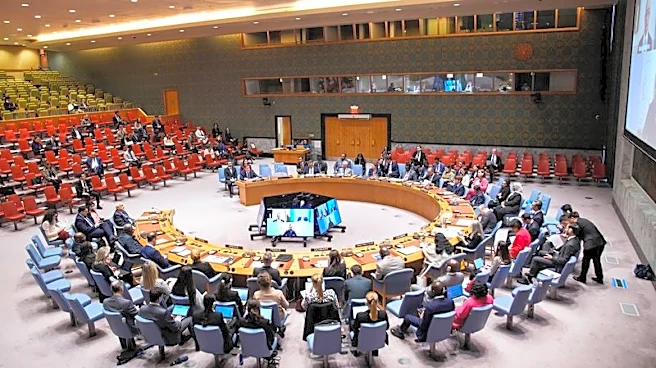
Germany's attempt to secure a seat on the United Nations Security Council was unsuccessful, with Foreign Minister Johann Wadephul attributing the loss to Germany's support for Israel and Russia's opposition
due to Germany's backing of Ukraine. Germany, which has previously served on the council six times, received only 104 votes, falling short of the 127 needed. Portugal and Austria were elected instead. The defeat is seen as a diplomatic setback for Chancellor Friedrich Merz, who has faced criticism from both domestic and international fronts. Germany's stance on Israel, particularly during the ongoing conflict in Gaza, has been a point of contention, with some viewing it as a factor in the loss of votes.
Why It's Important?
The failure to secure a seat on the UN Security Council is significant for Germany as it highlights the challenges of balancing international alliances and domestic political pressures. Germany's support for Israel, despite international criticism, underscores its commitment to certain foreign policy principles, but also reveals the diplomatic costs of such stances. The outcome may affect Germany's influence in international decision-making and its ability to advocate for its interests on the global stage. This development also reflects broader geopolitical tensions, particularly involving Russia and Ukraine, and the complexities of international diplomacy.
What's Next?
Following the defeat, Germany is expected to continue its diplomatic efforts and maintain its foreign policy positions, including its support for Israel. Chancellor Merz has indicated that Germany will remain a committed participant in the international system. Domestically, the outcome may lead to further scrutiny of Merz's foreign policy strategies and could influence future political dynamics within Germany. The government may need to reassess its approach to international relations to avoid similar setbacks in the future.
Beyond the Headlines
The situation highlights the ethical and strategic dilemmas faced by countries in international diplomacy, particularly when national interests conflict with broader international expectations. Germany's experience may serve as a case study in the complexities of maintaining principled foreign policies while navigating the realities of global politics. The incident also raises questions about the effectiveness of the UN Security Council's current structure and the influence of geopolitical rivalries on its operations.