






What's Happening?
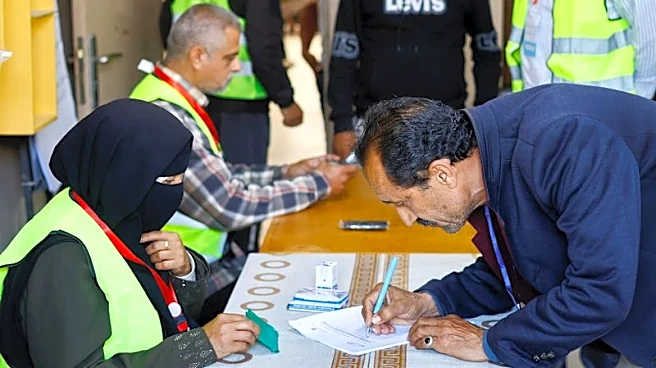
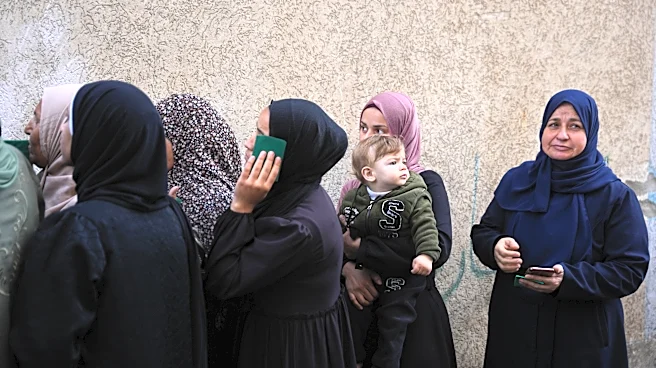
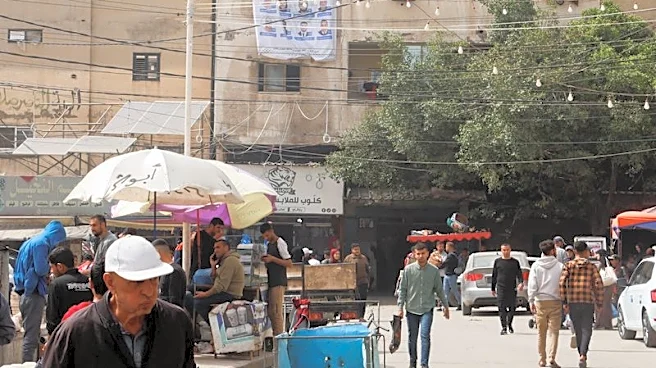
The Palestinian Authority has announced the successful completion of local elections in Deir al-Balah, Gaza, and the West Bank, marking a significant step towards long-delayed presidential elections. These elections, the first in Gaza in over two decades,
are seen as a symbolic move towards rebuilding political structures and achieving national unity. Despite challenges such as Israeli security restrictions and low voter turnout in Gaza, the elections proceeded without interference from Hamas, which did not field candidates. The elections were primarily for local councils responsible for infrastructure services. The Palestinian Authority, led by President Mahmoud Abbas, has not held a presidential election in 21 years, and this local election is viewed as a precursor to broader political reforms.
Why It's Important?
The successful execution of these local elections is crucial for the Palestinian Authority as it seeks to re-establish political legitimacy and unity across Palestinian territories. The elections are a response to international pressure for political reforms and are intended to pave the way for future presidential and legislative elections. This development is significant in the context of ongoing regional conflicts and the Palestinian Authority's efforts to assert its role as the internationally recognized representative of the Palestinian people. The elections also highlight the challenges of governance in a fragmented political landscape, where support for the current leadership has waned due to corruption and ongoing conflicts with Israeli settlers.
What's Next?
The Palestinian Authority aims to extend these local elections to other parts of Gaza, with the hope of eventually holding presidential and legislative elections. This process is expected to face challenges, including political opposition from Hamas and logistical issues related to voter registration and security. The international community will likely continue to monitor these developments closely, as they have implications for regional stability and the broader Israeli-Palestinian conflict. The outcome of these efforts could influence future peace negotiations and the potential for a two-state solution.