



What's Happening?
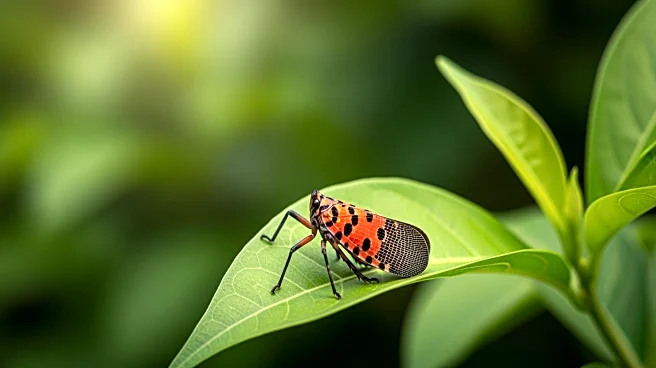
The spotted lanternfly, a planthopper native to Asia, has been identified as a significant pest in Kentucky, particularly in Gallatin County. First discovered in the United States in Berks County, Pennsylvania, this insect has spread to at least 14 states,
including New York, Delaware, and New Jersey. The spotted lanternfly feeds on over a hundred plant species, such as grapes, maples, apples, and pears, posing a threat to agriculture, forestry, and residential areas. In Kentucky, several adult lanternflies and egg masses were found on properties with infestations of the invasive tree of heaven. The insect's spread is often facilitated by human activity, as it can lay eggs on various surfaces like vehicles and outdoor furniture. Efforts are underway in northern Kentucky to survey and manage potential infestations, with circle traps being used to monitor the presence and population size of the pest.
Why It's Important?
The presence of the spotted lanternfly in Kentucky is a significant concern for the state's agriculture and forestry sectors. This pest can cause substantial economic damage by feeding on a wide range of plants, potentially leading to billions of dollars in losses. The insect's ability to spread rapidly through human activity and the horticultural trade exacerbates the threat. Effective management and control measures are crucial to prevent further spread and mitigate the impact on local ecosystems and economies. The infestation in Kentucky highlights the need for increased vigilance and reporting to contain the pest and protect valuable agricultural resources.
What's Next?
Surveys are being conducted in northern Kentucky to detect any new introductions of the spotted lanternfly. Nurseries, vineyards, botanical gardens, forests, and public parks are being inspected for signs of infestation. Circle traps are being utilized to capture and monitor the pest, providing data on population size and life stages. Public awareness and reporting are essential components of the management strategy, as early detection can help prevent the spread to new areas. Continued collaboration between agricultural agencies and the public will be necessary to address this invasive species effectively.