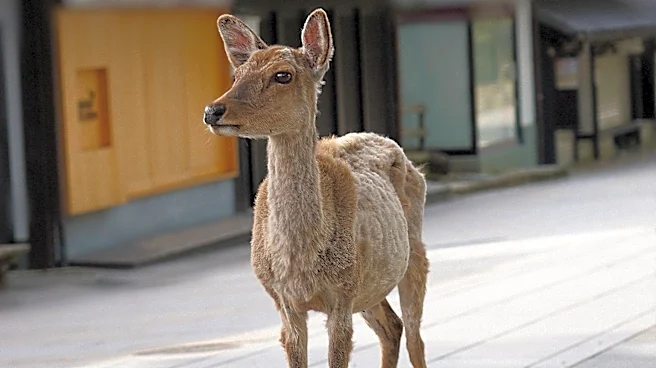








What's Happening?
Two Indonesian tourists have issued an apology following an incident at Nara Park in Japan where a deer consumed a piece of plastic from them. A video of the event, which showed a man and a woman near a deer, went viral on social media, leading to public
criticism. A Japanese man filming the encounter confronted the tourists, who appeared surprised and apologized on the spot. The woman involved later clarified that the man in the video was her father and denied any deliberate intent to feed plastic to the deer. She explained that her father allowed the deer to take the plastic wrapping, and they were too slow to retrieve it. The tourists also stated they were unaware that visitors should only feed the deer special crackers sold in the park. Nara tourism guidelines explicitly warn against giving animals paper, plastic, or other rubbish due to the severe harm or death it can cause. The incident has prompted renewed reminders for visitors to keep plastic bags, food packaging, and other loose items away from the deer and to adhere to local feeding regulations.
Why It's Important?
This incident highlights the critical importance of responsible tourism and adherence to local wildlife protection guidelines, particularly in popular tourist destinations like Nara Park. The viral spread of the video and subsequent public outcry underscore the power of social media in holding tourists accountable for their actions and raising awareness about environmental and animal welfare issues. For destinations that rely on tourism, such incidents can impact their reputation and potentially lead to stricter regulations if not addressed effectively. The health and safety of the deer, which are protected as Natural Monuments in Japan, are paramount, and the consumption of plastic can have fatal consequences. This event serves as a global reminder for travelers to educate themselves on local customs and rules regarding wildlife interactions to prevent harm to animals and avoid negative public perception.
What's Next?
Following this incident, Nara Park authorities and tourism bodies are likely to reinforce and potentially enhance their educational campaigns for visitors regarding appropriate interactions with the deer. This could include more prominent signage, multilingual informational materials, and possibly increased staff presence to monitor tourist behavior. The incident may also prompt discussions about the effectiveness of current guidelines and whether additional measures are needed to prevent similar occurrences. For the tourists involved, while they have apologized, the viral nature of the video means they will likely continue to face public scrutiny. The broader tourism industry might also see this as an opportunity to emphasize responsible travel practices, encouraging tour operators and travel agencies to better inform their clients about local regulations and environmental sensitivities in their destinations.
Beyond the Headlines
The incident at Nara Park delves into deeper ethical and cultural dimensions surrounding human-wildlife interactions in shared spaces. It exposes a potential disconnect between tourists' expectations of a 'natural' experience and the realities of managing wild animals in a highly visited area. The deer in Nara Park are accustomed to human presence, which can inadvertently lead to behaviors like seeking food from visitors, making them vulnerable to harmful substances. This situation also touches upon the challenges of cultural understanding and communication, as the tourists claimed ignorance of the specific feeding rules. It underscores the need for universal awareness campaigns that transcend language barriers and cultural norms to ensure the well-being of wildlife. Long-term, such events contribute to the ongoing global dialogue about sustainable tourism and the balance between economic benefits from tourism and the preservation of natural and cultural heritage.