










What's Happening?
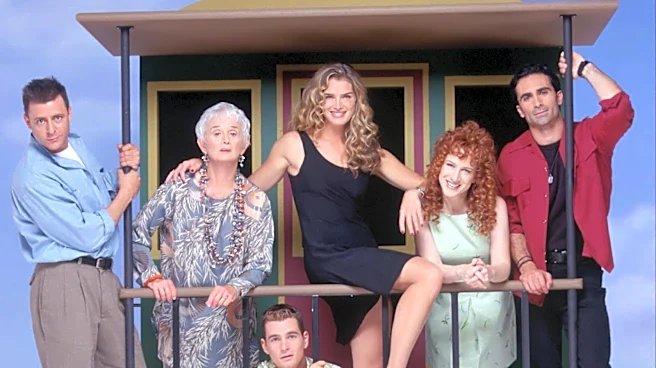
Oscar-nominated actress Barbara Barrie has died at the age of 95. Her representatives confirmed that her passing was medically assisted, in accordance with New York State's Medical Aid in Dying law, a cause she actively supported and advocated for. Barrie,
who had been diagnosed with terminal cancer and previously with idiopathic pulmonary fibrosis, passed away at her New York City home on October 28. Her career spanned over 55 years, beginning at age 11 in community theater. She earned an Academy Award nomination for her role in 1979's "Breaking Away" and a Tony nomination for her performance in the original Broadway production of Stephen Sondheim's musical "Company." Throughout her extensive career, Barrie also made numerous television appearances in series such as "Nurse Jackie" and "Law & Order: SVU."
Why It's Important?
The passing of Barbara Barrie, an acclaimed actress with a career spanning over five decades, highlights the growing discussion and legal landscape surrounding medical aid in dying in the United States. Her active advocacy for New York's Medical Aid in Dying law underscores the personal and public dimensions of end-of-life choices. As more states consider or implement similar legislation, Barrie's case adds a prominent voice to the debate, influencing public perception and policy discussions. Her decision to utilize medical assistance in dying, coupled with her public support for the law, could encourage further legislative action and public discourse on individual autonomy in end-of-life care, impacting healthcare policy and patient rights across the nation.
Beyond the Headlines
Barbara Barrie's choice to utilize medical aid in dying, and her prior advocacy for the New York State law, brings a significant cultural and ethical dimension to her passing. Beyond the immediate news of her death, this event contributes to the broader societal conversation about death with dignity, individual autonomy, and the role of legislation in personal healthcare decisions. Her public stance and the manner of her death could influence how medical aid in dying is perceived and discussed within the entertainment industry and among the general public. This development may also prompt deeper reflection on the ethical considerations for medical professionals and the support systems available for individuals facing terminal illnesses, potentially shaping future healthcare practices and legal frameworks.