




What's Happening?
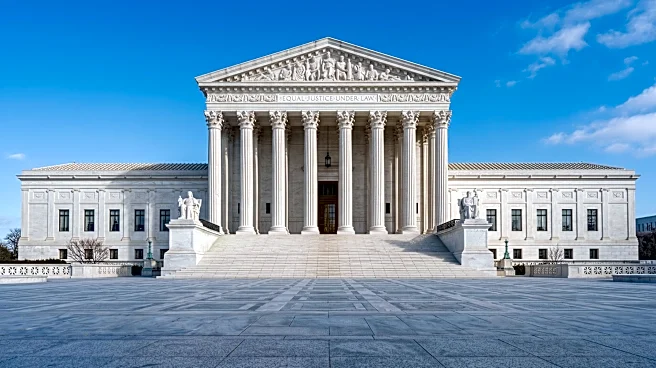
Alabama's five Republican U.S. House Representatives, including Robert Aderholt, Barry Moore, Gary Palmer, Mike Rogers, and Dale Strong, voted in favor of a constitutional amendment, H.J. Res. 1, to permanently fix the number of U.S. Supreme Court justices
at nine. This vote occurred on Wednesday, with the resolution failing to pass the House. The amendment, introduced by U.S. Rep. Andy Biggs (R-Ariz.), states that the Supreme Court shall consist of one chief justice and eight associate justices. The measure cleared the House Judiciary Committee on a party-line vote of 15-8 but failed on the House floor with a vote of 212-206, falling short of the two-thirds majority required for a constitutional amendment. In contrast, U.S. Reps. Terri Sewell (D-Birmingham) and Shomari Figures (D-Mobile), along with most House Democrats, voted against the amendment. House Speaker Mike Johnson (R-La.), who also voted for the amendment, emphasized the importance of defending the Supreme Court's integrity.
Why It's Important?
This vote highlights a significant partisan divide regarding the structure and future of the U.S. Supreme Court. Republicans view efforts to increase the number of justices as 'court-packing,' a move they believe would politicize the judicial system and undermine its integrity. By attempting to enshrine the nine-justice structure in the Constitution, they aim to prevent future administrations or Congresses from altering the court's composition for political gain. Democrats, on the other hand, have previously suggested expanding the court in response to rulings that they perceive as contrary to progressive agendas. The failure of this amendment underscores the deep ideological chasm in Washington over judicial appointments and the balance of power. The debate over court size has profound implications for the interpretation of laws, civil rights, and the overall direction of U.S. society, as the Supreme Court's decisions affect nearly every aspect of American life.
What's Next?
While the constitutional amendment to fix the Supreme Court at nine justices failed in the House, the debate over the court's composition is likely to continue. Republicans will likely persist in their efforts to prevent any expansion of the court, potentially introducing similar legislation in the future or making it a key issue in upcoming elections. Democrats, while currently opposing a constitutional amendment to limit the court's size, may continue to explore options for judicial reform, including the possibility of expanding the court, especially if they gain sufficient political power. The issue will remain a contentious point in judicial nominations and confirmations, with both parties using it to rally their bases. Public discourse on the Supreme Court's role and structure is expected to intensify, particularly as new vacancies arise or significant cases are decided, keeping the question of judicial reform at the forefront of national politics.
Beyond the Headlines
The ongoing battle over the Supreme Court's size transcends mere legislative procedure; it touches upon fundamental questions about the nature of American democracy and the separation of powers. The concept of 'court-packing' raises concerns about the judiciary's independence and its susceptibility to political manipulation. Historically, the number of Supreme Court justices has been altered by Congress, but the current nine-justice configuration has been stable for over a century and a half. Any move to change this number is seen by many as an attempt to rebalance the court's ideological leanings, potentially eroding public trust in the judiciary as an impartial arbiter of justice. This debate also reflects broader anxieties about the politicization of institutions and the erosion of norms in U.S. governance, suggesting a long-term struggle over the foundational principles of the American legal system.