









What's Happening?
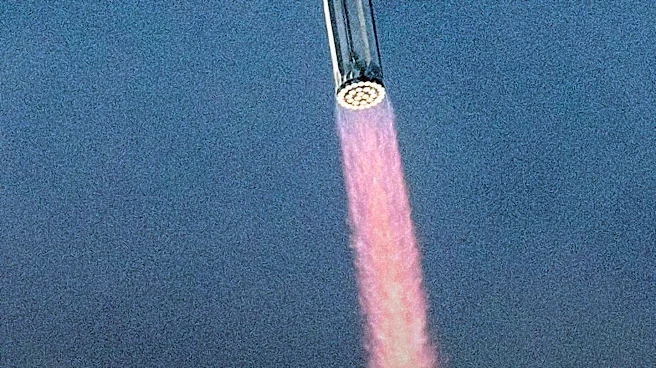
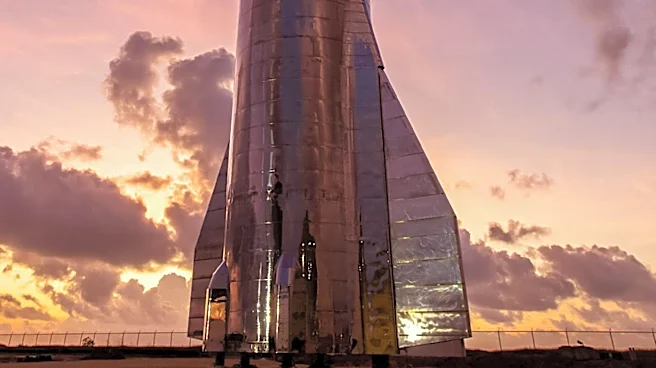
SpaceX's Starship Flight 13, scheduled for July 16, 2026, was aborted at the last second due to engine ignition issues. The launch was to take place from SpaceX's Starbase in Texas, marking the second test flight of the Starship Version 3. The mission
aimed to carry 20 V3 Starlink satellites to space, testing new payload capabilities. However, the launch was halted when some of the 33 Raptor engines on the Super Heavy booster failed to ignite. SpaceX plans to replace two of the engines before attempting another launch.
Why It's Important?
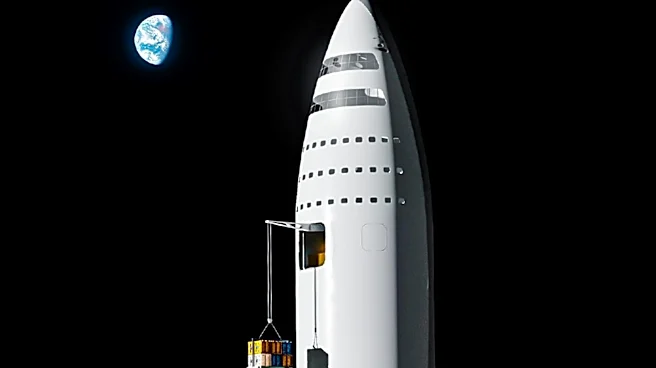
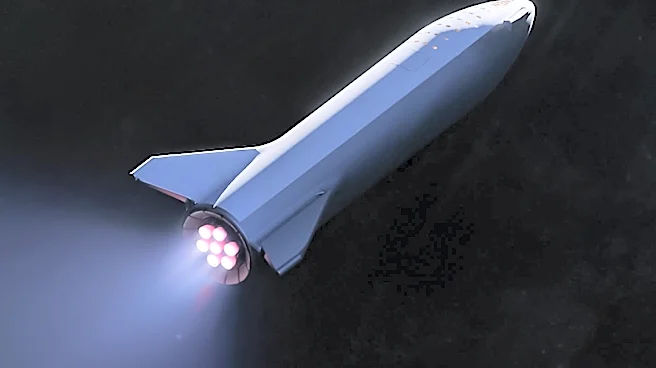
The Starship's development is pivotal for SpaceX's long-term goals, including Mars colonization and supporting NASA's Artemis lunar missions. The rocket's reusability and payload capacity represent significant advancements in space transportation technology. The aborted launch underscores the technical challenges SpaceX faces in achieving reliable operations. Successful resolution of these issues is crucial for SpaceX to maintain its competitive edge in the aerospace industry and fulfill its contracts with NASA.
What's Next?
SpaceX plans to replace the faulty engines and reschedule the launch for early next week. The company will conduct a thorough analysis to prevent similar issues in future launches. The aerospace community and investors will be closely monitoring SpaceX's progress, as the Starship's success is critical for upcoming missions and the company's financial performance.