

What's Happening?
A significant storm system is expected to intensify into a 'bomb cyclone' as it moves across the United States from the Rockies to the East Coast. This system is predicted to bring strong winds, severe thunderstorms, and potential travel disruptions across the eastern
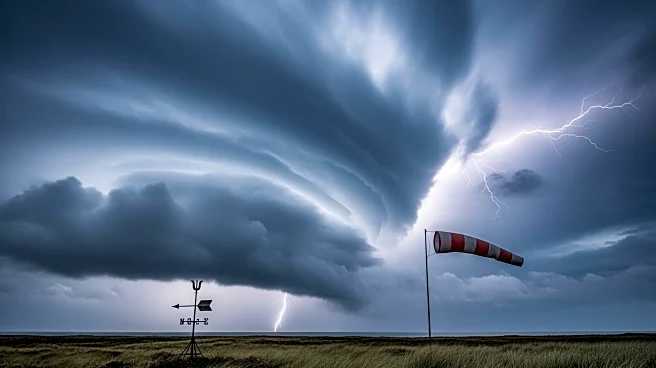
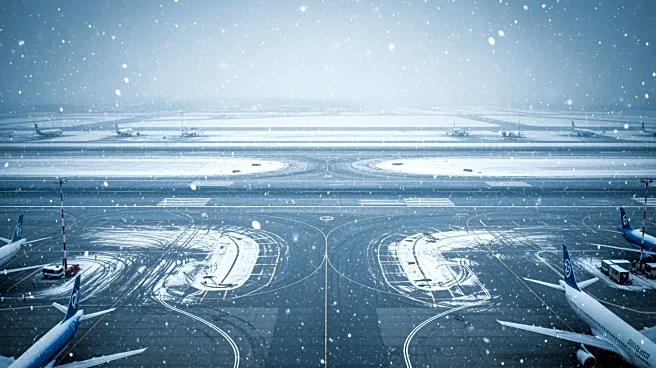
U.S., with particular impacts anticipated in New York. Meteorologists from AccuWeather have warned of widespread wind gusts ranging from 40 to 60 mph, which could result in downed tree limbs, power outages, and hazardous travel conditions. The storm is also likely to cause flight delays or cancellations at major airports, including those in New York City, Boston, Philadelphia, and Washington, D.C. Severe thunderstorms may develop along the East Coast, especially from the Mid-Atlantic into the Carolinas, with the possibility of damaging winds, heavy rain, and isolated tornadoes.
Why It's Important?
The intensification of this storm into a bomb cyclone could have significant implications for the eastern United States, affecting millions of residents and travelers. The potential for widespread power outages and travel disruptions could impact daily life and economic activities, particularly in major urban centers. The storm's timing, coinciding with the start of the workweek, could exacerbate its effects on transportation and infrastructure. Additionally, the severe weather conditions pose safety risks, necessitating preparedness measures from both individuals and local authorities. The storm's impact on air travel could have a ripple effect, causing delays and cancellations that affect not only the eastern U.S. but also connecting flights nationwide.
What's Next?
As the storm progresses, residents in affected areas are advised to secure outdoor items and prepare for potential power outages. The National Weather Service has issued a wind advisory for much of western and central New York, with strong gusts expected to develop Sunday evening and continue into Monday. Authorities are likely to monitor the storm's development closely, providing updates and advisories to ensure public safety. Travelers should check with airlines for the latest information on flight statuses and consider alternative travel plans if necessary. Emergency services and utility companies may also be on standby to respond to any disruptions caused by the storm.