





What's Happening?
A 48-year-old father from Nagoya, Japan, was reprimanded by police after leaving his 7-year-old son alone on Mount Fuji to continue climbing towards the summit with his older son. The incident occurred on August 20 on Mount Fuji’s Fujinomiya Trail. The younger
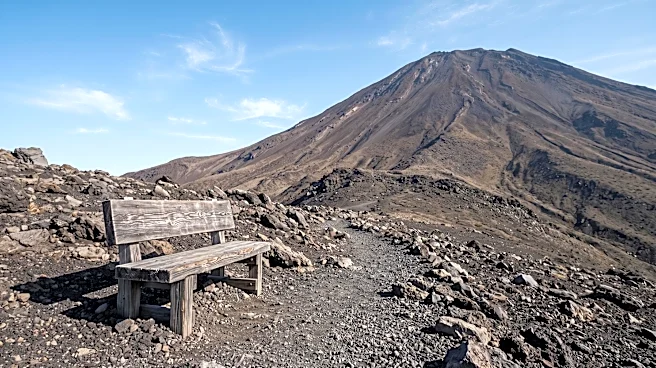
boy became fatigued around the sixth station, approximately 2,500 meters (8,000 feet) above sea level. The father instructed the child to 'wait here' and proceeded with his older son. A mountain hut worker discovered the 7-year-old sitting alone on a bench around 7:40 a.m., brought him inside, and contacted authorities. Police intercepted the father near the eighth station and ordered him to return for his son. The boy was unharmed and safely reunited with his father, who expressed deep regret for his 'rash decision.' Police emphasized that abandoning a child is unacceptable, regardless of the climbing objective.
Why It's Important?
This incident underscores critical safety concerns associated with outdoor activities, particularly in challenging environments like Mount Fuji. It highlights the severe risks of leaving a minor unsupervised in unpredictable conditions, as rain and fog were developing when the child was found. The event serves as a stark reminder for parents and guardians about their responsibility for child safety during recreational pursuits. For the U.S., where outdoor recreation is popular, this story reinforces the importance of adhering to safety guidelines, planning for all group members' capabilities, and never separating from children in potentially hazardous settings. It also brings attention to the legal and ethical implications of parental negligence in such situations, even if formal charges were not indicated in this specific case. The incident could prompt discussions among U.S. outdoor organizations and parenting groups about best practices for family excursions.
What's Next?
While authorities did not indicate formal charges or penalties for the father, the reprimand serves as a cautionary measure. Police urged hiking groups to maintain cohesion and adjust their pace to the least capable member, a recommendation that could be amplified by outdoor safety organizations globally. This incident may lead to increased awareness campaigns by park authorities and climbing associations regarding responsible hiking practices, especially when children are involved. It could also prompt a review of safety protocols in popular hiking destinations, both in Japan and internationally, to prevent similar occurrences. For the father, the immediate consequence is the public reprimand and the personal regret expressed, which may influence his future decisions regarding family outdoor activities.
Beyond the Headlines
This event delves into the deeper societal expectations of parental responsibility and the balance between personal ambition (reaching a summit) and the welfare of a child. It raises questions about judgment under pressure and the potential for 'summit fever' to override common sense and safety protocols. Culturally, the incident might spark conversations about differing approaches to child-rearing and risk assessment in various societies. Ethically, it highlights the moral imperative to prioritize a child's safety above all else, particularly in environments where conditions can rapidly deteriorate. The story also subtly touches on the role of community and bystanders, as a mountain hut worker intervened, demonstrating the importance of collective vigilance in ensuring public safety in remote areas.