

What's Happening?
Norway's Socialist Party has retracted its support for a proposal aimed at blocking Equinor's Hammerfest liquefied natural gas (LNG) plant from receiving a planned onshore power connection. This decision paves the way for the grid development to proceed.
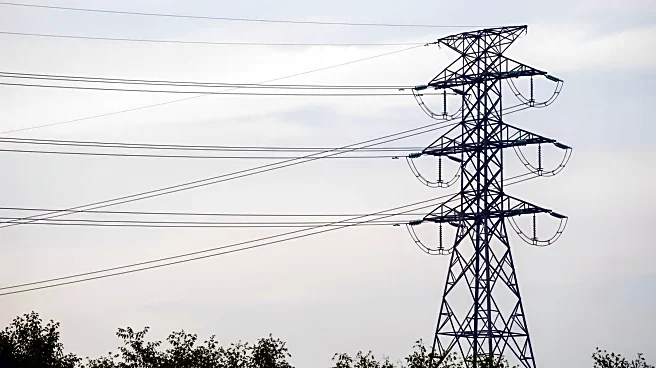
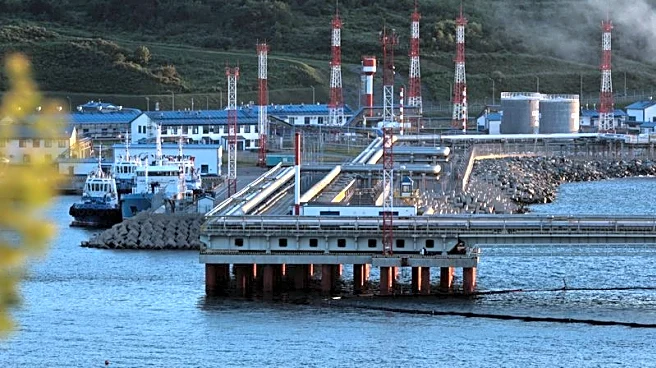
The Norwegian Parliament is scheduled to vote on an opposition proposal to revoke the LNG plant's planned link to the power grid. However, without the backing of the Socialist Party, the motion is likely to fail. The government had approved the connection in 2023 to reduce greenhouse gas emissions at the plant on Melkoeya island and extend its operational life. Critics argue that connecting the gas-driven plant to the regional grid could deprive other companies of electricity, increase local prices, and negatively impact the Sami Indigenous reindeer herders. The far-left Red Party had introduced a motion to halt the plan, urging the minority Labour government to release the power allocated to the electrification project by grid operator Statnett. Despite several political parties, including the right-wing Progress Party, indicating support for the proposal, the Socialist Party's withdrawal of support has altered the motion's trajectory.
Why It's Important?
The Socialist Party's decision to withdraw support for the opposition proposal has significant implications for Norway's energy policy and its commitment to reducing greenhouse gas emissions. The Hammerfest LNG plant is a critical component of Norway's gas export infrastructure, accounting for 5% of the country's gas exports. The plant's electrification is intended to lower emissions, aligning with broader environmental goals. However, the opposition to the project highlights the complex balance between environmental objectives and local economic impacts, such as potential electricity shortages and price increases. The decision also underscores the political dynamics within Norway, where energy policy is a contentious issue. The outcome of this development could influence future energy projects and Norway's role in Europe's energy supply, particularly as the continent seeks to diversify its energy sources.
What's Next?
With the Socialist Party's withdrawal of support, the opposition proposal is expected to fail in the upcoming parliamentary vote. This outcome will likely allow the electrification project at the Hammerfest LNG plant to proceed, potentially setting a precedent for similar projects in the future. Equinor and its partners, including Petoro, TotalEnergies, Vaar Energi, and Harbour Energy, will continue to monitor the situation closely, as the project's success could impact their operations and investments. The decision may also prompt further discussions among political parties and stakeholders about balancing environmental goals with economic and social considerations. Additionally, the outcome could influence Norway's energy strategy and its contributions to European energy security.