



What's Happening?
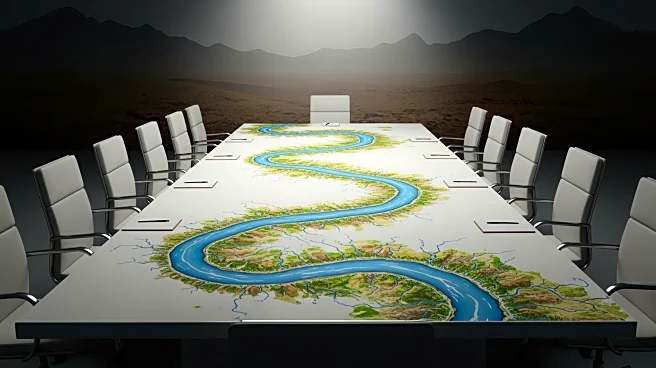
The Trump administration has summoned governors from seven western states to Washington to address the ongoing impasse over water usage from the Colorado River. The states involved are divided into two groups: the lower basin states of California, Arizona,
and Nevada, and the upper basin states of Colorado, Utah, Wyoming, and New Mexico. The meeting, led by Interior Secretary Doug Burgum, aims to resolve disagreements on water allocation as current rules are set to expire. California Governor Gavin Newsom will not attend but will send representatives. The negotiations have been ongoing for two years, with federal officials urging a resolution by February 14. The river, crucial for millions of people and agriculture, has been overused, and its reservoirs are at critically low levels.
Why It's Important?
The Colorado River is a vital water source for approximately 40 million people across the western United States, including major cities and agricultural areas. The ongoing negotiations are critical to ensuring sustainable water management in the face of climate change and prolonged drought conditions. Failure to reach an agreement could lead to federal intervention, potentially imposing significant water cuts, particularly affecting California and Arizona. The outcome of these talks will have far-reaching implications for water policy, agricultural productivity, and urban planning in the region. The situation also highlights the challenges of interstate cooperation in managing shared natural resources.
What's Next?
The upcoming meeting in Washington represents a critical opportunity for the involved states to reach a consensus on water usage. If an agreement is not reached by the February 14 deadline, the federal government may impose its own solutions, which could lead to legal challenges and further disputes. The states must balance their individual needs with the collective goal of preserving the Colorado River's resources. The potential for lawsuits remains high if negotiations fail, which could further complicate and delay resolution. The situation underscores the urgency of addressing water scarcity and climate change impacts in the western United States.