

What's Happening?
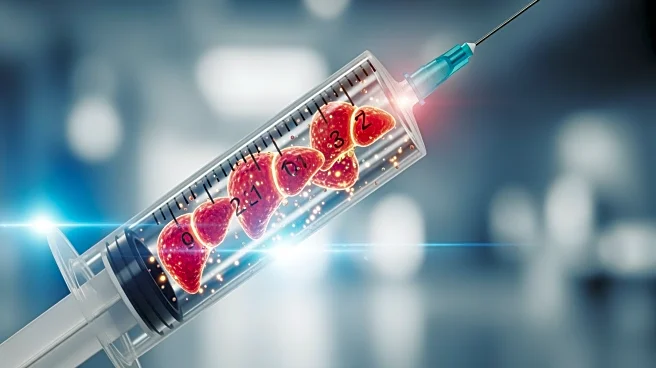
Researchers at MIT have developed 'mini livers' that can be injected into the body to take over the functions of a failing liver. These engineered tissue grafts, tested in mice, remained viable for at least two months and produced essential liver enzymes
and proteins. The technology aims to provide an alternative to liver transplantation, which is limited by organ availability and patient eligibility. The injectable liver cells could serve as a bridge to transplantation or a long-term treatment for liver disease, offering a less invasive option compared to surgery.
Why It's Important?
With over 10,000 Americans on the liver transplant waitlist and many ineligible for surgery, this innovation could significantly impact liver disease treatment. By providing a non-surgical alternative, 'satellite livers' could reduce the burden on transplant systems and improve patient outcomes. This approach also offers flexibility, allowing for additional treatments or grafts without the need for further surgery. If successful in humans, this technology could revolutionize how liver diseases are managed, offering hope to thousands of patients.
What's Next?
The research team plans to optimize the technology for human use, potentially developing 'stealthy' hepatocytes to evade the immune system. Future studies will focus on refining the injectable grafts and exploring their long-term viability and efficacy in humans. Clinical trials will be necessary to assess safety and effectiveness, with the potential to expand the technology to other organ systems. As the field advances, this approach could become a standard treatment for liver disease, reducing reliance on donor organs.