


What's Happening?
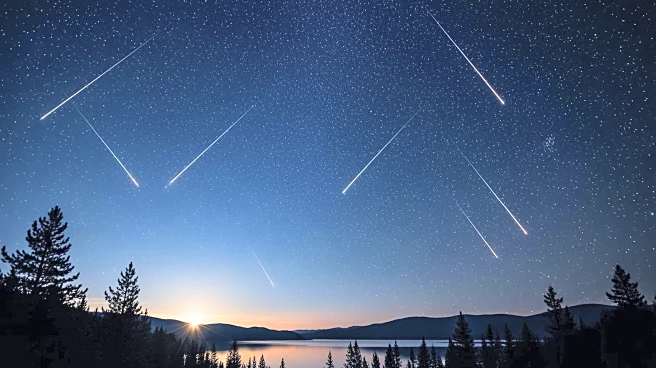
The Geminid meteor shower, considered one of the best meteor showers of the year, is peaking in the United States. The event is expected to produce over 100 meteors per hour during its peak on the night of December 13th and into the early morning hours
of December 14th. The meteors originate from the debris stream of the near-Earth asteroid 3200 Phaethon. The radiant point of the shower is located near the star Castor in the constellation Gemini, with Jupiter also visible nearby. Optimal viewing times are during the pre-dawn hours, although high meteor rates are anticipated during the moonless evenings of December 13th and 14th.
Why It's Important?
The Geminid meteor shower provides a unique opportunity for sky watchers and astronomy enthusiasts to witness a natural celestial event. This annual phenomenon not only captivates the public's imagination but also serves as a reminder of the dynamic nature of our solar system. The event can inspire interest in astronomy and science, potentially encouraging educational pursuits in these fields. Additionally, the visibility of such a significant number of meteors can enhance public awareness of near-Earth objects and the importance of monitoring them for planetary defense.
What's Next?
As the Geminid meteor shower concludes, astronomers and enthusiasts will continue to monitor other celestial events and prepare for future meteor showers. The next major meteor shower, the Quadrantids, is expected to peak in early January. Meanwhile, the data collected from observing the Geminids can contribute to ongoing research about the behavior and composition of meteoroids and their parent bodies, like 3200 Phaethon. Public interest generated by the Geminids may also lead to increased participation in community stargazing events and educational programs.