





What's Happening?
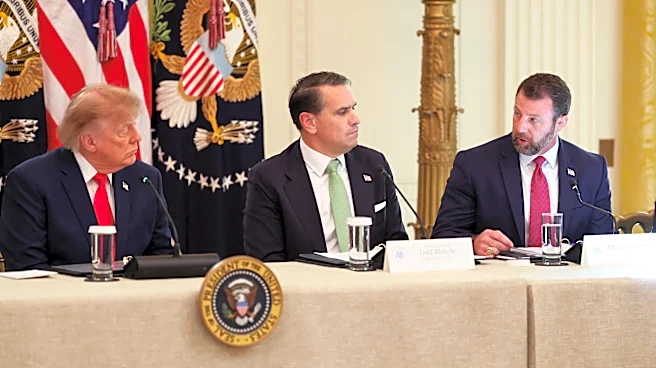
The Department of Justice (DOJ) has provided an update on the Antitrust Division’s collaboration with state Attorneys General regarding investigations into mergers with predominantly intrastate effects. Associate Attorney General Stanley E. Woodward,
Jr. stated that while federalism guides the DOJ to focus on mergers with regional or national implications, the Department may investigate local transactions, especially when there's an antitrust issue of national significance. Deputy Assistant Attorney General G. Charles Beller of the Antitrust Division emphasized the importance of deferring to the agency with relative competence, welcoming leadership from state enforcers in matters with uniquely local interests, such as when a state is a direct purchaser or when competitive effects are limited to a single state. Since January 2026, the Antitrust Division has partnered with Attorneys General in California and Tennessee on consent decrees in the cement and asphalt industries, referred investigations in asphalt markets in New York, Pennsylvania, and New Jersey to their respective Attorneys General, and jointly investigated both local and multistate mergers with states.
Why It's Important?
This collaboration between the DOJ and state Attorneys General is crucial for maintaining competitive markets across the United States, particularly in sectors with significant local impact like construction materials. The DOJ's willingness to partner with or defer to state enforcers on local mergers ensures that antitrust concerns at the state level are adequately addressed, preventing potential monopolies or anti-competitive practices that could harm local consumers and businesses. This approach strengthens the overall antitrust enforcement framework in the U.S., demonstrating a coordinated effort to protect competition. For industries involved in local mergers, this means increased scrutiny and the potential for state-level intervention, even if a merger doesn't trigger federal concerns. It also highlights the importance for merging parties to assess both federal and state antitrust implications, as state Attorneys General can pursue remedies beyond those sought by federal agencies.
What's Next?
The DOJ and state Attorneys General are expected to continue and potentially expand their collaborative efforts in reviewing local mergers. This ongoing partnership will likely lead to more coordinated investigations and enforcement actions, particularly in industries where competitive effects are localized. Merging companies, especially those operating in sectors like construction, healthcare, and retail, should anticipate thorough reviews from both federal and state antitrust authorities. The model of consent decrees and referrals to state Attorneys General will likely be replicated in future cases, ensuring that local market dynamics are considered in antitrust assessments. This collaborative approach aims to create a more robust and comprehensive antitrust enforcement landscape across the U.S.
Beyond the Headlines
The collaboration between federal and state antitrust enforcers reflects a deeper commitment to federalism and the principle of shared governance in protecting economic fairness. It acknowledges that while federal agencies handle broad national issues, states possess unique insights into local market conditions and consumer needs. This multi-layered enforcement mechanism serves as a critical check against corporate consolidation that could disproportionately affect specific regions or communities. The emphasis on 'distinct competencies' and 'uniquely local interests' highlights the nuanced approach required for effective antitrust enforcement in a diverse economy like the U.S. This framework not only safeguards competition but also empowers states to play a more active role in shaping their economic landscapes, fostering a more responsive and accountable regulatory environment.