







What's Happening?
A recent report titled 'Fueling Agriculture: Biofuels as the Catalyst' by U.S. Farmers and Ranchers in Action (USFRA) is gaining significant attention in the U.S. Senate and across the country. The report emphasizes the potential of biofuels to support
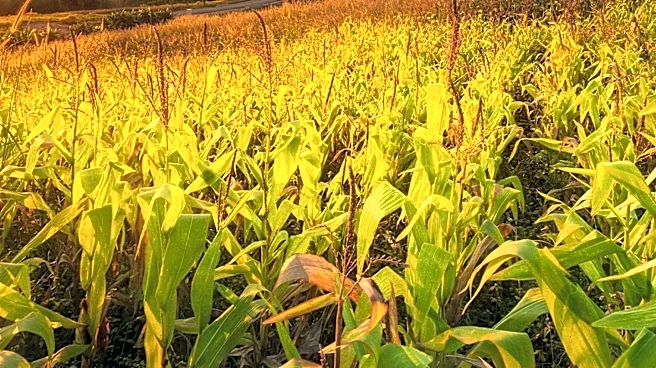
American agriculture, particularly through the expansion of E15 legislation. Key members of Congress, including Representatives Julie Fedorchak (R-ND), Angie Craig (D-MN), and Dusty Johnson (R-SD), have publicly endorsed the report, highlighting its implications for the agricultural sector. The report suggests that without increased biofuel production, the U.S. could lose 30 million corn acres in the coming decades, which would negatively impact family farms and rural communities. The Renewable Fuels Association and the U.S. Grains & BioProducts Council (USGBC) have also expressed support for the report, noting its importance in educating trading partners about renewable fuels and positioning U.S. farmers in the global liquid fuel market.
Why It's Important?
The report underscores the critical role of biofuels in sustaining and expanding the U.S. agricultural sector. By advocating for higher blend rates of renewable fuels, the report aims to secure a stable market for U.S. farm commodities, which is essential for maintaining the economic viability of rural communities. The potential loss of 30 million corn acres could have severe economic repercussions, leading to the decline of family farms and rural economies. The report's findings are a call to action for policymakers to support biofuel legislation, which could help mitigate these risks and promote sustainable agricultural practices. Additionally, the report positions the U.S. as a key player in the global liquid fuel market, which includes marine and aviation fuels, thereby expanding economic opportunities for American farmers.
What's Next?
The report's findings are likely to influence upcoming legislative discussions on biofuel policies, particularly the E15 legislation. Lawmakers may consider the report's recommendations to prevent the projected decline in corn acreage and support rural economies. The Renewable Fuels Association and USGBC are expected to continue advocating for the adoption of higher blend rates for renewable fuels. As the report gains momentum, it may also prompt further research and discussions on the role of biofuels in achieving agricultural sustainability and energy independence. Stakeholders, including policymakers, farmers, and industry leaders, will likely engage in dialogues to explore the implementation of the report's recommendations.