
What's Happening?
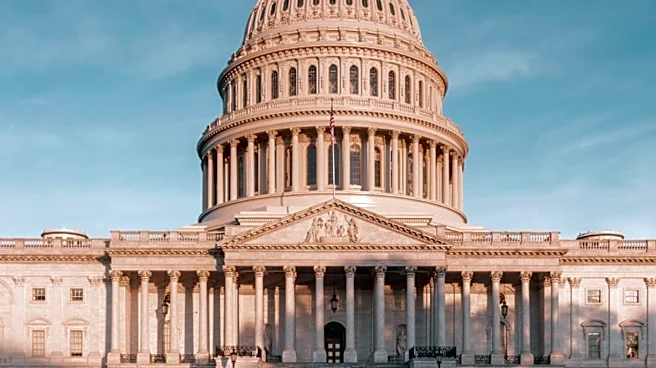
The Farm Bill, a critical piece of legislation for the agricultural sector, is currently on hold as Congress is in recess. Senator John Hoeven, a key figure in the Senate Agriculture Committee, expressed
confidence that the bill will advance once lawmakers return next month. The bill's progress was stalled due to a tied vote in the Senate Agriculture Committee, which Hoeven attributed to the absence of Senator Mitch McConnell. Instead of adjourning, the committee recessed, anticipating that Senator McConnell's return would provide the necessary majority to move the bill forward. A significant point of contention in the negotiations has been the Supplemental Nutrition Assistance Program (SNAP) policy, though Senator Hoeven indicated that a compromise has been offered. Additionally, Hoeven is advocating for year-round E15, an ethanol-gasoline blend, to be addressed before the end of the year.
Why It's Important?
The delay in passing the Farm Bill has significant implications for U.S. farmers and ranchers, who rely on its provisions for stability and support. The bill typically covers a wide range of agricultural programs, including commodity support, conservation, crop insurance, and nutrition assistance. Its absence creates uncertainty in a sector already facing challenges such as low commodity prices and high input costs, as highlighted by Senator Hoeven. The inclusion of year-round E15 is important for the ethanol industry and corn growers, as it expands market opportunities for biofuels and can impact energy policy. The ongoing negotiations over SNAP policy underscore the broader societal impact of the Farm Bill, affecting food security for millions of Americans. The bill's passage is crucial for providing a predictable policy environment that enables agricultural planning, investment, and economic resilience across rural America.
What's Next?
Upon Congress's return from recess next month, the Senate Agriculture Committee is expected to resume its work on the Farm Bill. Senator Hoeven anticipates that with Senator Mitch McConnell's presence, the committee will secure a majority vote to advance the legislation to the Senate floor. The offered compromise on SNAP policy will be a critical factor in facilitating its passage. Farmers, ranchers, and agricultural stakeholders are encouraged to engage with their senators to emphasize the urgency of passing the bill. Beyond the Farm Bill, Senator Hoeven will continue to push for progress on year-round E15 before the legislative session concludes for the year. The legislative process will involve further debate and potential amendments as the bill moves through the House and Senate, ultimately requiring presidential approval to become law.
Beyond the Headlines
The legislative gridlock surrounding the Farm Bill reflects deeper political divisions and the complexities of balancing diverse interests within agricultural policy. The reliance on a single senator's presence for a majority vote highlights the fragility of bipartisan cooperation in Congress. The contentious nature of SNAP policy often pits agricultural interests against broader social welfare concerns, making it a recurring flashpoint in Farm Bill negotiations. The push for year-round E15 also touches on environmental policy, energy independence, and the role of biofuels in the national energy mix. The prolonged delay in passing such a foundational bill can erode confidence among agricultural producers and create a ripple effect throughout the food supply chain. This situation underscores the need for more robust and resilient legislative processes to ensure timely support for essential sectors of the U.S. economy.