



What's Happening?
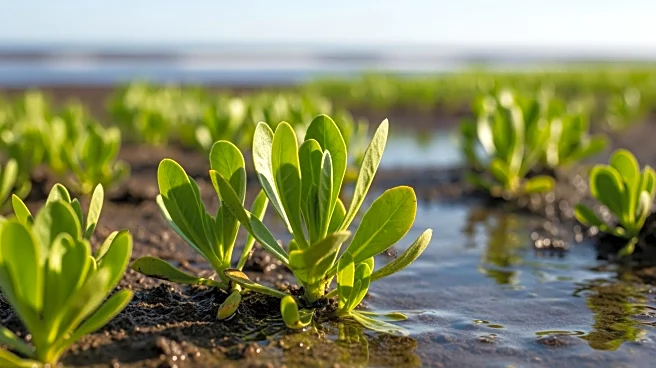
Halophytes, salt-tolerant plants, are being explored as a sustainable solution to boost agricultural productivity in coastal areas facing rising sea levels. These plants thrive in high-salinity environments, such as coastlines and salt marshes, and are being studied
for their potential to enhance soil quality and crop yields. In Venice, researchers are experimenting with bi-cropping techniques, rotating traditional crops like tomatoes with halophytes such as glasswort, to improve agricultural output. This approach aims to mitigate the impact of saltwater intrusion and fertilizer runoff, which threaten coastal ecosystems. The Tidal Garden project in Venice is also working to increase the commercial demand for halophytes by involving chefs, artists, and poets to highlight their culinary and cultural value.
Why It's Important?
The use of halophytes in agriculture represents a promising adaptation strategy to combat the challenges posed by climate change, particularly in coastal regions. As sea levels rise and soil salinity increases, traditional farming methods become less viable. Halophytes offer a resilient alternative that can help maintain food security and support local economies. By integrating these plants into existing agricultural systems, farmers can potentially reduce their reliance on freshwater resources and chemical fertilizers, leading to more sustainable practices. This approach not only addresses environmental concerns but also opens new economic opportunities through the commercialization of halophytes as specialty crops.
What's Next?
The success of halophyte-based agriculture in Venice could serve as a model for other coastal regions facing similar challenges. Researchers and policymakers may look to expand these practices to other vulnerable areas, promoting the adoption of halophytes on a larger scale. However, challenges remain in changing consumer habits and scaling up industrial processing of these plants. Continued research and collaboration with local communities will be essential to overcome these barriers and fully realize the potential of halophytes in sustainable agriculture. As awareness grows, there may be increased investment in developing infrastructure and markets for these salt-tolerant crops.