


What's Happening?
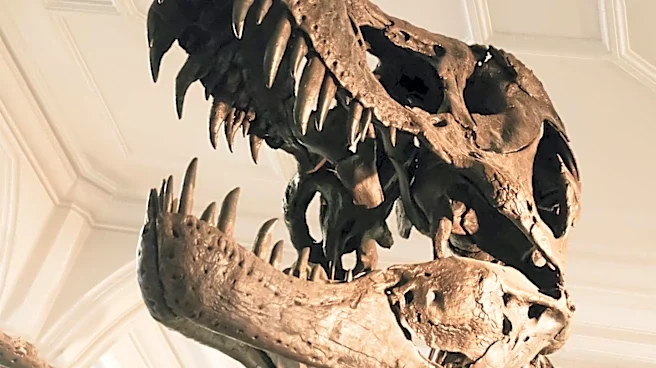
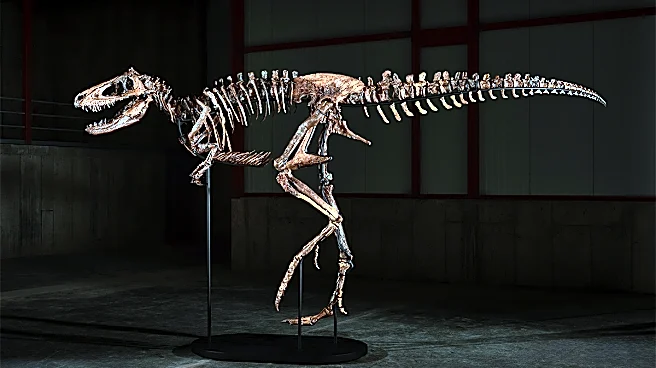
Spinosaurus is currently recognized as the largest known carnivorous dinosaur, surpassing the Tyrannosaurus rex in size. Recent findings and studies indicate that Spinosaurus could reach lengths of 41-59 feet and weigh over 20 tons. This theropod dinosaur, which
lived in what is now North Africa during the Cretaceous period (approximately 112 to 97 million years ago), was semi-aquatic. Its distinctive features included neural spines up to 5.4 feet long, likely forming a sail-like structure, and a narrow, nearly 6-foot skull with elongated jaws and conical, unserrated teeth, indicative of a piscivorous diet. Isotope analysis of its teeth further supports a semi-aquatic lifestyle, suggesting it was a generalized and opportunistic predator with a bias towards fishing. The original fossil evidence of S. aegyptiacus was destroyed in WWII, but more recently, abundant Spinosaurus fossils have been discovered in the Kem Kem Beds of Morocco.
Why It's Important?
The re-evaluation of Spinosaurus's size and predatory habits significantly alters our understanding of prehistoric ecosystems during the Cretaceous period. Identifying Spinosaurus as the largest carnivorous dinosaur challenges the long-held perception of T. rex as the undisputed apex predator. This discovery highlights the ecological diversity and complexity of ancient life, particularly in North Africa, where Spinosaurus coexisted with other large predators like Carcharodontosaurus and massive crocodylomorphs. The semi-aquatic nature of Spinosaurus also expands our knowledge of dinosaur adaptations, demonstrating that some large theropods occupied niches beyond terrestrial hunting. This understanding is crucial for paleontologists reconstructing ancient food webs and environmental conditions, offering a more complete picture of dinosaurian evolution and behavior.
What's Next?
Ongoing paleontological research in regions like the Kem Kem Beds of Morocco is expected to yield further insights into Spinosaurus and its contemporaries. Future studies may focus on refining estimates of its size, understanding the precise function of its neural spines, and detailing its interactions within the complex Cretaceous ecosystem. The discovery of additional fossils could provide more definitive evidence regarding its diet, hunting strategies, and the extent of its semi-aquatic adaptations. Continued analysis of fossil teeth and bone structures, combined with advanced imaging and comparative anatomy techniques, will likely contribute to a more nuanced understanding of this colossal predator and its place in prehistoric life. The findings will also inform public exhibitions and educational materials, updating the popular image of dinosaurs.
Beyond the Headlines
The ongoing discoveries related to Spinosaurus underscore the dynamic nature of scientific understanding and the continuous re-evaluation of established facts in paleontology. The destruction of original fossil evidence during WWII highlights the fragility of scientific data and the importance of meticulous preservation and documentation. The existence of a massive semi-aquatic predator like Spinosaurus also prompts deeper questions about the evolutionary pressures that led to such unique adaptations, particularly in environments where both terrestrial and aquatic prey were abundant. This case exemplifies how new fossil finds can dramatically shift scientific paradigms, encouraging a more flexible and evidence-based approach to reconstructing Earth's ancient past and the creatures that inhabited it.