







What's Happening?
On August 7, the U.S. Senate confirmed 74 nominees proposed by President Trump for various administrative positions using an 'en bloc' confirmation process. This method allowed the Senate to approve multiple nominees simultaneously, bypassing individual
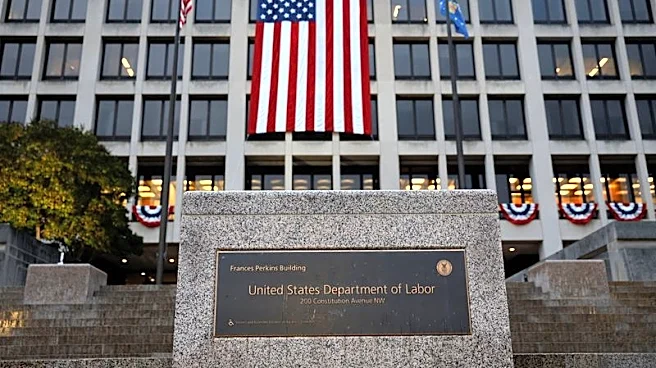
votes for each. Among the confirmed were several high-profile positions, including ambassadors to countries like Australia, Norway, and Brazil, as well as key roles in federal agencies. Notably, Cameron Hamilton was confirmed as the Director of the Federal Emergency Management Agency (FEMA), a position he previously held temporarily. David Cummins was appointed to lead the Transportation Security Administration (TSA), and Brett Matsumoto was confirmed as the Director of the Bureau of Labor Statistics (BLS). These confirmations come amid ongoing efforts by the Trump administration to streamline federal agencies and reduce their budgets.
Why It's Important?
The confirmation of these nominees is significant as it fills critical vacancies in the federal government, potentially stabilizing operations in key agencies. For instance, FEMA, which has experienced leadership instability, now has a confirmed director in Cameron Hamilton, who aims to balance cost control with effective disaster management. Similarly, the appointment of David Cummins to the TSA could influence the agency's future direction, especially with plans to privatize some airport services. Brett Matsumoto's confirmation to the BLS is crucial for maintaining the integrity of labor statistics, which are vital for economic policy-making. These appointments reflect the Trump administration's broader strategy to reshape federal agencies, emphasizing efficiency and cost reduction.
What's Next?
With these confirmations, the Trump administration is expected to continue its agenda of reducing federal agency sizes and budgets. The newly confirmed officials will likely face challenges in implementing these changes, particularly in agencies like FEMA and TSA, where operational demands are high. The administration's push for privatization and budget cuts may encounter resistance from within the agencies and from external stakeholders, including unions and advocacy groups. The effectiveness of these new leaders in navigating these challenges will be critical in determining the success of the administration's policies.