





What's Happening?
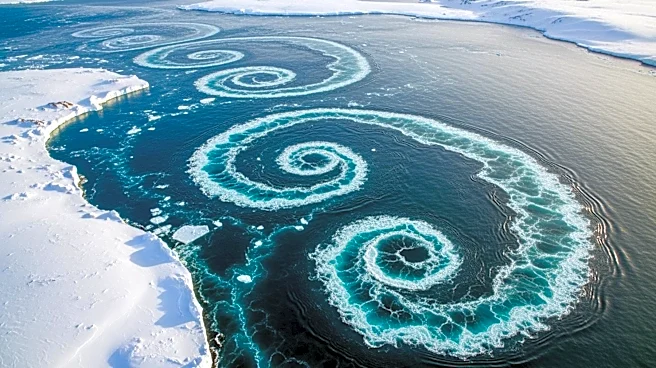
NASA's Landsat 8 satellite has captured a striking image of von Kármán vortex streets near Peter I Island in the Southern Ocean. This phenomenon occurs when strong winds, known as the Roaring Forties, Furious Fifties, and Screaming Sixties, encounter
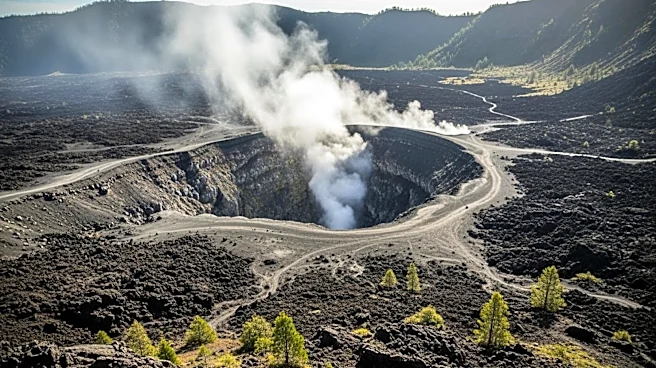
obstacles like islands, causing the airflow to deflect and form counterrotating spirals. The image, taken on February 11, 2026, shows these spirals forming downwind of the ice-cloaked volcanic island, which is located 400 kilometers off the coast of West Antarctica. The island, discovered in 1821 by Russian explorer Fabian Gottlieb von Bellingshausen, is known for its challenging ice conditions and remote location, which have limited scientific research. The island's summit features a 100-meter-wide crater, and while it is described as a shield-like volcano, there are no records of recent eruptions.
Why It's Important?
The capture of von Kármán vortex streets by NASA's Landsat 8 highlights the dynamic atmospheric conditions in the Southern Ocean, a region critical for understanding global climate patterns. These vortex streets provide valuable data on wind patterns and their interactions with geographical features, which can inform climate models and improve weather forecasting. The remote location of Peter I Island and its surrounding ice conditions make it a unique natural laboratory for studying geological and climatic processes. The data collected by NASA's satellite missions, including Operation IceBridge, contribute to a comprehensive understanding of polar regions, which are sensitive indicators of climate change.
What's Next?
Continued satellite monitoring and research missions in the Southern Ocean and Antarctic regions are essential for advancing our understanding of climate dynamics. Future missions may focus on detailed studies of the island's geology, biodiversity, and ice history to gain insights into past climate conditions. As technology advances, more sophisticated instruments could provide higher-resolution data, enhancing our ability to monitor and predict changes in these remote areas. Collaboration between international scientific communities will be crucial in expanding research efforts and sharing findings to address global climate challenges.
Beyond the Headlines
The study of von Kármán vortex streets and other atmospheric phenomena in remote regions like the Southern Ocean underscores the importance of satellite technology in modern science. These observations not only enhance our understanding of Earth's climate system but also demonstrate the interconnectedness of global weather patterns. The data collected can inform policy decisions related to climate change mitigation and adaptation strategies. Additionally, the exploration of such remote areas can inspire public interest in science and the importance of preserving Earth's natural environments.