



What's Happening?
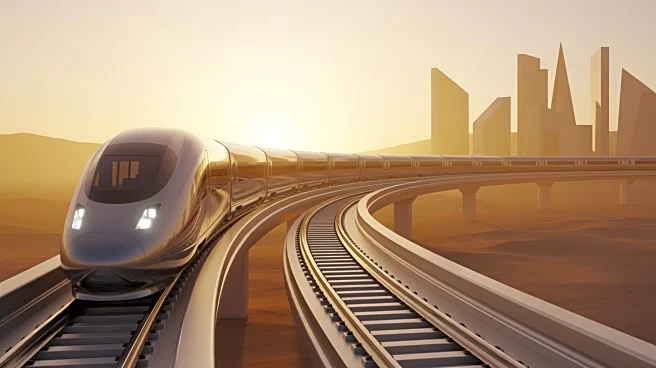
The United Arab Emirates is set to debut its high-speed rail system, Etihad Rail, in 2026. The initial phase will connect Dubai and Abu Dhabi, with trains traveling at speeds up to 125 mph, reducing travel time to 57 minutes. The network will eventually
link 11 cities across the seven emirates, covering a 560-mile route from Fujairah to Al Sila. The diesel-powered trains are designed to withstand extreme desert conditions and offer three classes of seating: economy, family, and first class.
Why It's Important?
The launch of Etihad Rail represents a significant advancement in the UAE's infrastructure, potentially transforming intercity travel within the country. It is expected to enhance connectivity, reduce road traffic, and promote economic growth by facilitating easier movement of people and goods. The project aligns with the UAE's broader goals of modernizing transportation and reducing carbon emissions by offering a more sustainable travel option compared to road transport.
What's Next?
As the rail network expands, services will extend to Sharjah and Fujairah, further integrating the emirates. The development may prompt increased investment in surrounding areas, boosting local economies and potentially leading to urban development projects. Stakeholders, including government agencies and businesses, are likely to monitor the project's progress closely, assessing its impact on tourism and commerce.
Beyond the Headlines
The introduction of high-speed rail in the UAE could set a precedent for other countries in the region, encouraging similar infrastructure projects. It may also influence cultural and social dynamics by making travel more accessible, fostering greater interaction among the emirates' diverse populations.