


What's Happening?
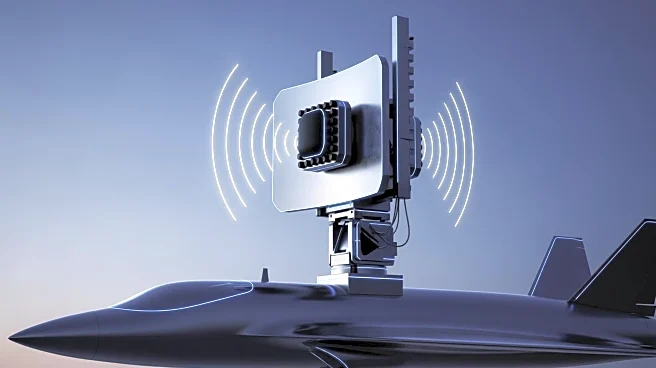
Hensoldt, a defense electronics company, is positioning itself for a significant role in Germany's airborne electronic attack capability under the luWES program. The initiative aims to introduce electronic attack systems on various platforms, including
large aircraft, business jets, and uncrewed aircraft. Hensoldt's CEO, Oliver Dörre, expressed confidence in the company's positioning, citing potential orders ranging from hundreds of millions to billions of euros. The German government plans to contribute jammers to NATO by 2030, prompting a likely competition this year. Hensoldt has previously collaborated with Airbus and Rohde & Schwarz to demonstrate electronic warfare capabilities. The company is also involved in the Pegasus signals intelligence aircraft program for the German Air Force, with expectations for expansion beyond the initial three-aircraft contract.
Why It's Important?
Germany's push for an airborne electronic attack capability represents a significant investment in defense technology, with implications for national security and NATO's strategic capabilities. Hensoldt's involvement could enhance its reputation and market position, potentially leading to lucrative contracts and technological advancements. The initiative aligns with broader trends in defense modernization and electronic warfare, impacting industry stakeholders, including competitors and allied nations. Successful implementation could strengthen Germany's defense posture and contribute to NATO's collective security efforts, influencing geopolitical dynamics and defense policies.
What's Next?
The German government is expected to launch a competition for the luWES program, with Hensoldt aiming to secure a major role. The timeline for contract awards remains uncertain, but the government's commitment to contributing jammers to NATO by 2030 suggests a sense of urgency. Hensoldt's experience with the Pegasus program positions it well for potential involvement as a system integrator or mission equipment contributor. The company is also monitoring developments in the Future Combat Air System (FCAS) program, seeking opportunities for collaboration and innovation in sensor and networking technologies.