



What's Happening?
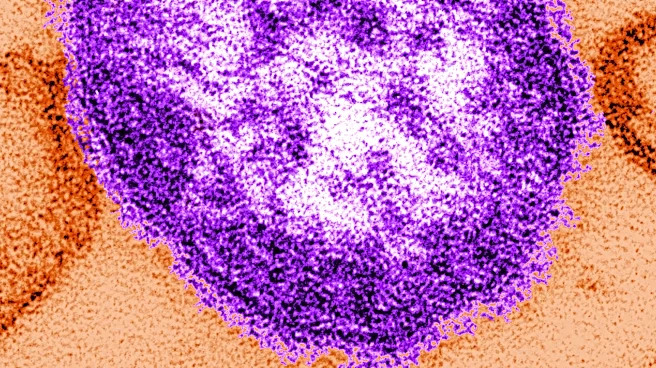
The United States has lost its status as a country that has eliminated measles, a public health achievement reached in 2000. This determination was announced by the Pan American Health Organization’s regional commission on measles and rubella elimination.
The Rhode Island Department of Health confirmed this development on Tuesday, noting that the loss of status signifies that chains of measles transmission have persisted within the country's borders. A disease is considered eliminated when it is no longer continuously transmitted within a country. The announcement was made in conjunction with the Northeast Public Health Collaborative, a group of 17 public health agencies. The collaborative stated that widespread inaccurate information has led to declining vaccination rates, resulting in the resurgence of a preventable disease. They reaffirmed support for immunization schedules from the American Academy of Pediatrics and the American Academy of Family Physicians, calling for efforts to regain elimination status. Before the measles vaccine, the disease affected over 500,000 Americans annually and caused 400 to 500 deaths. Recent U.S. outbreaks have predominantly occurred in areas with low vaccination coverage.
Why It's Important?
The loss of measles elimination status in the U.S. represents a significant setback for public health, highlighting the critical impact of declining vaccination rates. Measles is recognized as the most contagious infectious disease, with no specific treatment, making vaccination the primary defense. This development poses a direct threat to public health, particularly for vulnerable populations such as infants under six months and immunocompromised individuals who cannot be vaccinated. The resurgence of measles could strain healthcare systems and lead to increased morbidity and mortality, reversing decades of progress in disease control. The situation underscores the broader societal challenge of combating misinformation regarding vaccines, which directly influences public health outcomes. The call from health officials for increased vaccination reflects an urgent need to protect communities and prevent further spread, emphasizing the collective responsibility in maintaining herd immunity. The economic implications could include increased healthcare costs for treatment and outbreak management, as well as potential disruptions to daily life if outbreaks become widespread.
What's Next?
In response to the loss of measles elimination status, the Rhode Island Department of Health and the Northeast Public Health Collaborative are urging increased vaccination efforts. The department had previously issued a reminder in late October about the importance of vaccination, especially ahead of holiday travel, citing outbreaks in New York, Pennsylvania, Canada, and Mexico. Children are typically recommended to receive their first MMR vaccine dose between 12 and 15 months and a second dose between ages 4 and 6. For infants aged 6 to 11 months traveling internationally or to outbreak areas, one dose is recommended before travel, followed by the routine two doses after their first birthday. Dr. Jerry Larkin, Rhode Island’s director of health, emphasized that measles is particularly dangerous for young children but is almost entirely preventable through vaccination. Vaccines are available through healthcare providers and community clinics, with the health department offering no-cost vaccines to families facing insurance issues or access barriers. Future actions will likely involve intensified public health campaigns to promote vaccination and address vaccine hesitancy, aiming to improve coverage rates and ultimately regain the country's measles elimination status.
Beyond the Headlines
The re-emergence of measles in the U.S. extends beyond immediate public health concerns, touching upon deeper societal and ethical dimensions. The role of misinformation in driving down vaccination rates highlights a critical challenge in the digital age: how to effectively counter false narratives that directly impact public well-being. This situation could prompt a re-evaluation of strategies for public health communication and education, potentially leading to more robust campaigns designed to build trust and disseminate accurate scientific information. Ethically, the decline in vaccination rates raises questions about individual liberties versus collective responsibility, particularly concerning the protection of those who cannot be vaccinated. Legally, there might be renewed discussions about vaccine mandates or policies to ensure higher community immunity levels. Culturally, the event reflects a broader societal trend of skepticism towards established institutions and scientific consensus, which could have long-term implications for public health initiatives beyond measles. The long-term shift could involve a more proactive and integrated approach to public health, emphasizing community engagement and resilience against health misinformation.