





What's Happening?
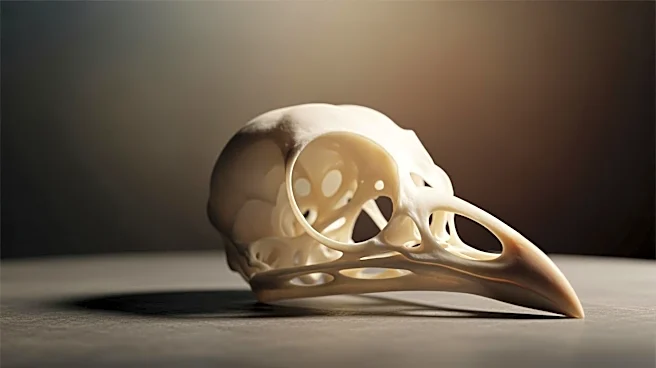
Researchers, led by Prof. Steve Brusatte from the University of Edinburgh, are investigating the skulls of modern birds to gain insights into the behavior and cognitive abilities of long-extinct dinosaurs like the T. rex. This study is based on the premise
that birds are direct descendants of dinosaurs, sharing significant genetic and anatomical traits. By examining bird skulls, scientists hope to identify features that could indicate similar behavioral capabilities in dinosaurs. The research is part of a broader effort to understand the evolutionary journey from dinosaurs to modern birds, as detailed in Brusatte's book, 'The Story of Birds'. The study highlights how certain features, such as feathers and wings, evolved initially for purposes other than flight, eventually contributing to the survival and diversification of avian species after the mass extinction event 66 million years ago.
Why It's Important?
This research is significant as it bridges the gap between paleontology and modern biology, offering a new perspective on the evolutionary history of birds and their dinosaur ancestors. Understanding the cognitive abilities of dinosaurs through their avian descendants could reshape our knowledge of prehistoric life and evolution. This study also underscores the resilience and adaptability of birds, which survived the mass extinction that wiped out their dinosaur relatives. The findings could influence conservation strategies by highlighting the evolutionary traits that have enabled birds to thrive in changing environments. Additionally, this research may inspire further studies into the genetic and anatomical links between extinct and extant species, potentially leading to new discoveries in evolutionary biology.
What's Next?
Future research will likely focus on more detailed genetic and anatomical comparisons between birds and their dinosaur ancestors. Scientists may conduct further experiments to identify specific brain features in birds that correlate with advanced behaviors, providing more concrete evidence of similar capabilities in dinosaurs. This could involve advanced imaging techniques and genetic studies to explore the evolutionary pathways that led to the development of these traits. The findings may also prompt a reevaluation of existing theories about dinosaur behavior and intelligence, potentially leading to new interpretations of fossil evidence.
Beyond the Headlines
The study raises intriguing questions about the ethical implications of genetic experimentation, as researchers have already manipulated chicken embryos to exhibit dinosaur-like traits. This line of research could lead to debates about the limits of scientific exploration and the potential consequences of altering genetic material. Additionally, the study highlights the cultural fascination with dinosaurs and their portrayal in media, which often emphasizes their physical prowess over cognitive abilities. By shifting the focus to the intellectual capabilities of these ancient creatures, the research may influence how dinosaurs are depicted in educational and entertainment contexts.