




What's Happening?
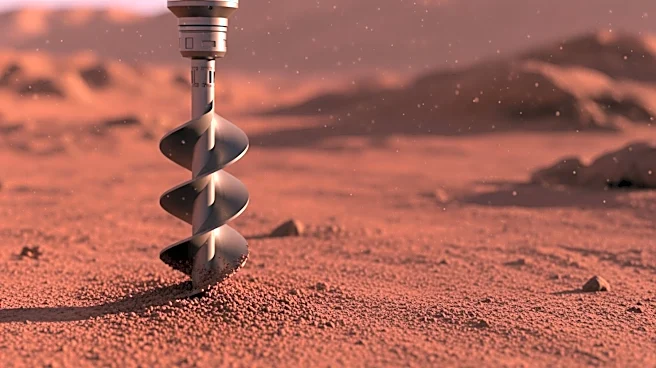
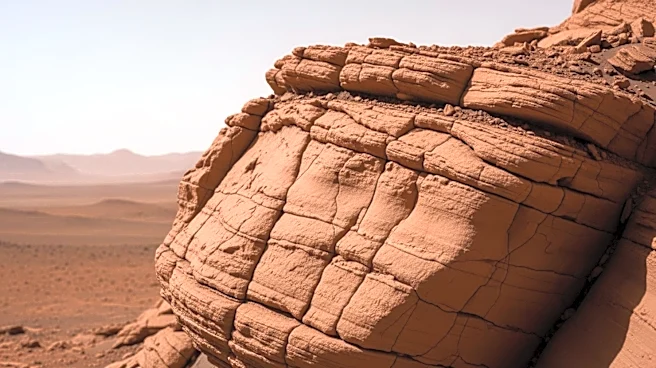
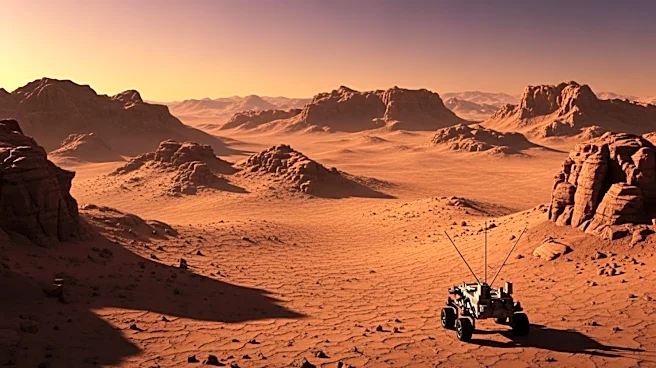
NASA's Curiosity rover faced a significant challenge while drilling into a rock target named Atacama on Mars. The rock, a detached block, was inadvertently lifted along with the drill bit, complicating the extraction process. The rover team devised a plan
to free the drill by altering its orientation and using percussion to vibrate the rock off. These efforts were successful, allowing the rover to continue its scientific mission. During this period, the rover focused on remote sensing activities, including ChemCam LIBS measurements and Mastcam imaging, to gather data on the Martian surface.
Why It's Important?
The successful resolution of the drilling issue highlights the resilience and adaptability of NASA's Mars missions. Overcoming such challenges is crucial for the continued exploration and study of Mars, providing valuable insights into the planet's geology and potential for past life. The data collected by Curiosity contributes to our understanding of Mars' environment and aids in the preparation for future missions, including those that may involve human exploration. The ability to troubleshoot and resolve technical issues remotely is a testament to the ingenuity of NASA's engineering teams and their commitment to advancing space exploration.
What's Next?
Following the resolution of the drilling issue, Curiosity will continue its scientific investigations on Mars. The rover team plans to identify a more stable drill target to collect samples for analysis. These efforts will support ongoing research into Mars' geological history and climate. Future missions may build on Curiosity's findings, using them to inform the design and objectives of upcoming Mars exploration projects. The continued success of Curiosity also reinforces the importance of developing robust systems capable of handling unforeseen challenges in space exploration.