





What's Happening?
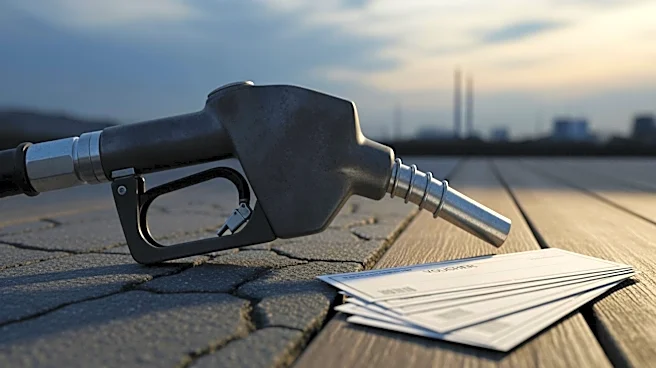
Russian proxy authorities in occupied Crimea have announced the introduction of 'fuel vouchers' and restrictions on gasoline sales due to ongoing fuel shortages. These shortages are attributed to Ukrainian strikes on supply routes and oil infrastructure.
Sergey Aksyonov, the Russian proxy head of Crimea, stated that starting May 31, sales of 95-octane gasoline at major gas stations will require vouchers. The distribution of this fuel will prioritize municipal and social transport. Additionally, restrictions have been placed on 92-octane gasoline, limiting purchases to 20 liters per vehicle. These measures follow a series of Ukrainian strikes targeting Russian military and oil infrastructure, which have intensified in recent weeks. Ukrainian forces have expanded their medium-range strike capabilities, impacting Russian-controlled areas and supply routes, including those forming a 'land bridge' to Crimea.
Why It's Important?
The implementation of fuel vouchers and restrictions in Crimea highlights the significant impact of Ukrainian military actions on Russian logistics and infrastructure. These measures reflect the broader strategy of Ukraine to disrupt Russian supply lines and weaken its military capabilities. The fuel shortages in Crimea could affect the daily lives of residents and the operational capacity of Russian forces in the region. This development underscores the ongoing tensions and the strategic importance of energy resources in the conflict. The situation also illustrates the challenges faced by Russian authorities in maintaining stability in occupied territories amid continued Ukrainian resistance.
What's Next?
The fuel shortages in Crimea are expected to stabilize within 30 days, according to Aksyonov. However, the ongoing Ukrainian strikes suggest that the situation may remain volatile. The Russian authorities may need to explore alternative supply routes or increase security measures to protect existing infrastructure. The international community will likely continue to monitor the situation closely, as it has implications for regional stability and the broader geopolitical landscape. Further Ukrainian strikes could lead to additional measures by Russian authorities to manage resources and maintain control over occupied territories.