






What's Happening?
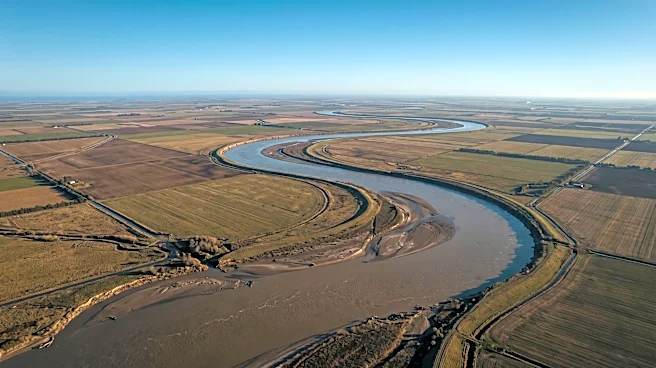
Rivers in the United States, such as the Mississippi, are dynamic systems that constantly change course, creating new channels, cutting off old bends, and reshaping surrounding landscapes. This natural process, driven by erosion and sediment deposition,
can occur gradually through bank erosion or suddenly during floods, known as avulsions. These changes have significant practical implications, affecting farmland values, flood insurance, bridge design, and transportation infrastructure. For instance, in the Mississippi Delta, migrating channels influence property ownership, especially when a river serves as a boundary. The U.S. Army Corps of Engineers manages the Old River Control Complex to maintain the flow distribution between the Mississippi and Atchafalaya Rivers, preventing a major course change that could significantly alter water levels and sediment delivery across southern Louisiana.
Why It's Important?
The shifting courses of U.S. rivers have profound economic and societal impacts. Farmland values are directly affected as erosion can diminish acreage or create new land, complicating property ownership and legal boundaries. Flood risks are altered, necessitating adjustments in flood insurance policies and community planning. Infrastructure, including bridges and transportation routes, must be designed and maintained to withstand these dynamic changes, incurring substantial costs. The management of river systems, like the Mississippi, is critical for protecting major ports, industrial facilities, and urban areas from the consequences of natural avulsions. Balancing ecological processes with public safety and economic needs is a continuous challenge, as river changes can lead to habitat shifts, impact drinking water sources, and necessitate ongoing engineering interventions to preserve existing economic and social structures.
What's Next?
Communities and authorities along U.S. rivers will continue to face the challenge of adapting to dynamic river courses. Ongoing monitoring of channel movement and protecting floodplain space will be essential for managing these natural processes. This includes continuous maintenance of existing control structures, such as the Old River Control Complex, and planning for future flood events. Landowners near rivers will likely require professional legal and surveying guidance to address property boundary complexities arising from gradual shifts or sudden avulsions. Furthermore, urban and agricultural planning will need to integrate the understanding of river migration to mitigate risks to infrastructure and property. The long-term strategy will involve a blend of engineering solutions, policy adjustments, and ecological considerations to ensure both public safety and the sustainability of riverine ecosystems.
Beyond the Headlines
Beyond the immediate practical challenges, river course changes highlight a deeper tension between human development and natural processes. The efforts to control rivers, such as through levees and channelization, while providing flood protection and stable infrastructure, can also reduce the ecological complexity of river systems. This intervention raises ethical questions about the extent to which natural river dynamics should be managed versus allowed to unfold. The impact on wetland habitats, sediment distribution, and biodiversity underscores the interconnectedness of river systems with broader environmental health. The legal complexities surrounding property ownership when rivers form boundaries also reveal how human constructs of land ownership clash with the fluid reality of nature. Ultimately, understanding and adapting to river changes requires a holistic approach that considers not only economic and safety concerns but also the long-term ecological integrity and cultural significance of these vital waterways.