
What's Happening?
In 2026, NASA and several private companies are set to embark on ambitious lunar exploration missions. NASA plans to send a crew of four astronauts, including three Americans and one Canadian, on a 10-day
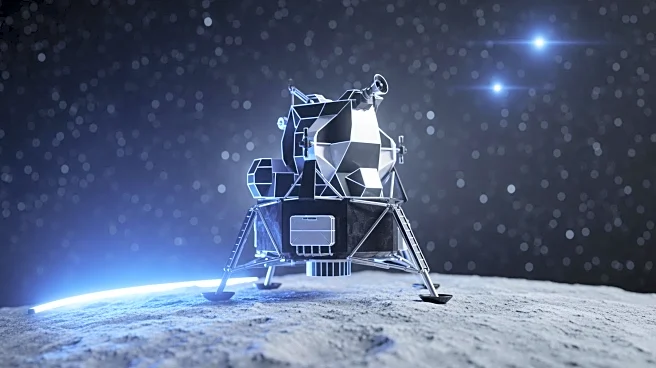
mission that will orbit the Moon. This mission aims to provide new insights into lunar regions not previously explored by the Apollo missions. Additionally, Blue Origin, founded by Jeff Bezos, is developing a new lunar lander called Blue Moon, which is scheduled for testing in 2026. This lander is designed to transport NASA astronauts to the Moon's surface. Other U.S. companies like Astrobotic Technology, Intuitive Machines, and Firefly Aerospace are also planning lunar landings as part of a commercial push to deliver payloads to the Moon. Meanwhile, China is preparing its Chang'e 7 probe to explore the Moon's south pole, where frozen water may exist in permanently shadowed craters.
Why It's Important?
These missions mark a significant resurgence in lunar exploration, driven by both governmental and private sector interests. The renewed focus on the Moon could lead to advancements in space technology and exploration capabilities. The potential discovery of water ice on the Moon's south pole is particularly important, as it could support future human missions by providing essential resources like drinking water and rocket fuel. The involvement of private companies in lunar exploration highlights the growing commercialization of space, which could lead to more cost-effective and innovative solutions for space travel. This shift may also stimulate economic growth and create new opportunities in the aerospace industry.
What's Next?
As these missions progress, the results could influence future lunar exploration strategies and international collaborations. The data collected from these missions may guide the planning of subsequent manned lunar landings under NASA's Artemis program. Additionally, the success of private companies in delivering payloads to the Moon could encourage further investment in commercial space ventures. The international community will likely monitor these developments closely, as they could impact global space exploration policies and partnerships.
Beyond the Headlines
The resurgence of lunar exploration raises questions about the ethical and legal implications of space resource utilization. As countries and companies vie for access to lunar resources, there may be a need for updated international agreements to govern space activities. The potential for resource extraction on the Moon also prompts discussions about environmental preservation and the sustainable use of extraterrestrial resources. These considerations will be crucial as humanity expands its presence beyond Earth.