


What's Happening?
PEN America, a nonprofit organization advocating for free expression, has released a report titled 'Out of Circulation: Expanding Censorship in Public Libraries,' detailing the escalating threats faced by U.S. public libraries. The report indicates that
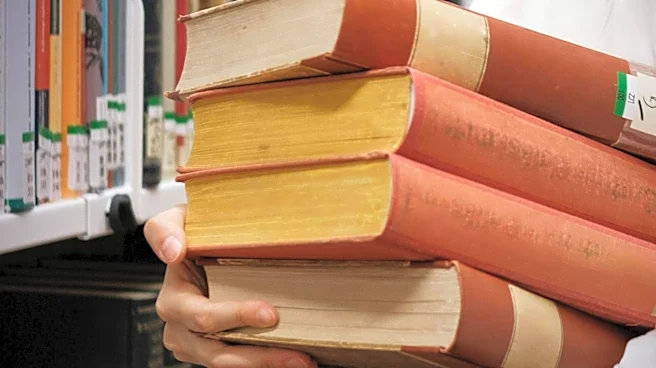
these institutions are at a 'breaking point' due to political interference, harassment, and ideological censorship. This includes a significant increase in book bans, with 51% of all attempted book bans nationwide now occurring in public libraries, a notable expansion from their previous concentration in school libraries. The report highlights various incidents such as bomb threats, protests, and physical assaults on librarians, leading to the cancellation of events. It also notes efforts to defund libraries and undermine their independent governance, with politically appointed officials sometimes overriding the decisions of democratically elected library boards. The content targeted often includes literature featuring LGBTQ+ individuals, race, racism, and historical narratives involving minority communities, as well as seemingly innocuous 'butt and fart' books.
Why It's Important?
The findings of PEN America's report underscore a critical threat to the foundational democratic role of public libraries in the U.S. Libraries are designed to be inclusive spaces providing access to diverse information and perspectives, free from partisan pressure. The current wave of censorship and ideological attacks undermines this principle, potentially limiting access to a wide range of literature and information for communities. This trend can have profound societal impacts by restricting intellectual freedom, hindering education, and marginalizing certain groups whose stories are being targeted for removal. The verbal and physical attacks on librarians, coupled with efforts to defund libraries, create a hostile environment that could deter professionals from working in these vital institutions and reduce the quality and accessibility of library services. The politicization of library governance also threatens local control and the ability of libraries to serve the varied needs of their communities impartially.
What's Next?
In response to these challenges, communities are beginning to organize and resist efforts to destabilize public libraries. The report notes instances of backlash, such as the defeat of numerous Moms for Liberty candidates in Florida's primary elections, indicating a potential shift in public sentiment. Moving forward, there may be increased advocacy from organizations like PEN America and the American Library Association to protect librarians and library resources. This could involve legal challenges against book bans and legislative efforts to safeguard library funding and governance from political interference. Public engagement, including supporting pro-library candidates in local elections and participating in community efforts to defend intellectual freedom, will likely play a crucial role in determining the future of public libraries. Librarians and educators may continue to face pressure, but also find renewed support from communities committed to preserving open access to information.
Beyond the Headlines
The escalating attacks on public libraries reveal deeper societal tensions regarding cultural values, identity, and the control of information. The targeting of books with LGBTQ+ themes and discussions of race reflects a broader culture war playing out in educational and public institutions. This trend could lead to a chilling effect, where librarians and educators self-censor to avoid controversy, thereby limiting the diversity of materials available even without formal bans. The weaponization of defunding and the installation of politically aligned officials on library boards represent a systemic attempt to reshape public discourse and restrict intellectual inquiry. The long-term implications could include a less informed populace, a decline in critical thinking skills, and a further polarization of society as access to varied perspectives diminishes. The struggle over public libraries is not just about books; it is about the fundamental right to read, learn, and engage with a multitude of ideas in a democratic society.