

What's Happening?
The United States and the Syrian Democratic Forces (SDF) have agreed to extend a ceasefire with the Syrian government in northeastern Syria for an additional 15 days. This extension, announced on January 24, 2026, aims to stabilize the region and facilitate
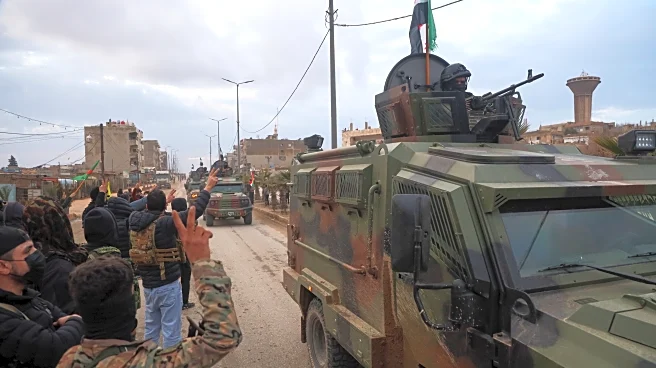
the transfer of ISIS detainees from Syria to Iraqi-controlled facilities. The U.S. Central Command (CENTCOM) has indicated that up to 7,000 detainees may be moved as part of this operation. The ceasefire follows a phone call between Syrian President Ahmed al Shara and U.S. President Donald Trump, which led to a temporary halt in the Syrian government's offensive on SDF-held territories. Despite the ceasefire, both the SDF and Syrian forces are preparing for potential renewed hostilities, with the SDF fortifying positions in key areas such as Hasakah City and Qamishli.
Why It's Important?
The extension of the ceasefire is crucial for maintaining U.S. counter-ISIS objectives in the region. By ensuring stable conditions, the U.S. can continue its efforts to manage ISIS detainees, which is a significant aspect of its broader strategy to combat terrorism. The potential transfer of detainees to Iraq could alleviate some of the security burdens in Syria and help prevent the resurgence of ISIS. However, the situation remains tense, with both sides preparing for possible conflict resumption, which could lead to further instability and ethnic-based violence. The ceasefire also highlights the complex geopolitical dynamics in the region, involving U.S. interests, Syrian government actions, and Kurdish aspirations.
What's Next?
The successful transfer of ISIS detainees is expected to take several days to weeks. Meanwhile, the SDF and Syrian government forces are likely to continue their military preparations, which could lead to renewed fighting if the ceasefire breaks down. The international community, including Kurdish and humanitarian organizations, is advocating for the establishment of humanitarian corridors to aid civilians in conflict zones like Kobani. The situation remains fluid, with potential implications for regional security and U.S. foreign policy in the Middle East.
Beyond the Headlines
The ongoing conflict in northeastern Syria underscores the ethnic tensions between Kurdish and Arab populations, which could be exacerbated by renewed hostilities. The Syrian government's military strategy, which includes surrounding and isolating SDF-held areas, may lead to significant humanitarian challenges. Additionally, the geopolitical implications of U.S. involvement in the region, particularly in relation to its counter-terrorism objectives, continue to shape the broader Middle Eastern landscape.