








What's Happening?
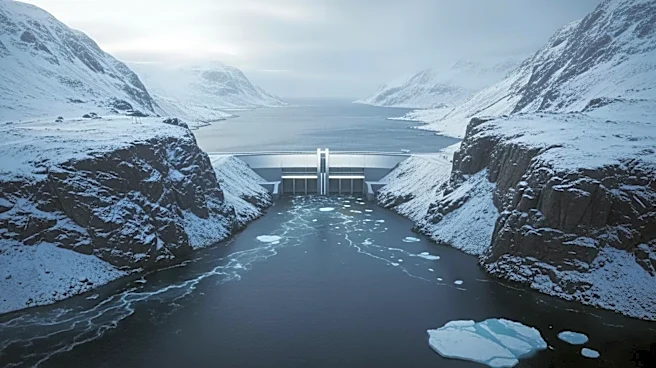
Researchers have proposed constructing a massive dam across the Bering Strait between Alaska and Russia as a potential solution to prevent the collapse of the Atlantic Meridional Overturning Circulation (AMOC). The AMOC is a crucial ocean current that
regulates climate in Northern Europe and other regions. The study suggests that by disconnecting the Pacific Ocean from the Arctic Ocean, the dam could help sustain the AMOC, which is currently weakening and may collapse by 2100. However, the proposal is controversial due to potential environmental impacts, including disruptions to marine ecosystems, fishing industries, and Indigenous communities reliant on the strait for food and trade.
Why It's Important?
The potential collapse of the AMOC could have catastrophic consequences, such as drastic temperature drops in Northern Europe, droughts, and rising sea levels along the northeast coast of North America. These changes could disrupt food production and have widespread economic and social impacts. The proposed dam, while offering a possible mitigation strategy, poses significant environmental and geopolitical challenges. It highlights the complex trade-offs involved in geoengineering solutions to climate change, emphasizing the need for careful consideration of unintended consequences.
What's Next?
Further modeling studies are needed to assess the feasibility and potential impacts of the proposed dam. Researchers stress the importance of exploring alternative solutions, such as reducing greenhouse gas emissions, to address the underlying causes of AMOC weakening. The proposal may prompt discussions among policymakers, environmentalists, and Indigenous groups about the best strategies to combat climate change while minimizing harm to ecosystems and communities.
Beyond the Headlines
The proposal to build a dam across the Bering Strait raises ethical and legal questions about large-scale geoengineering projects. It underscores the need for international cooperation and governance in addressing climate change, as such projects could have far-reaching impacts beyond national borders. The debate also highlights the urgency of finding sustainable solutions to climate change that balance technological innovation with environmental stewardship.