
What's Happening?
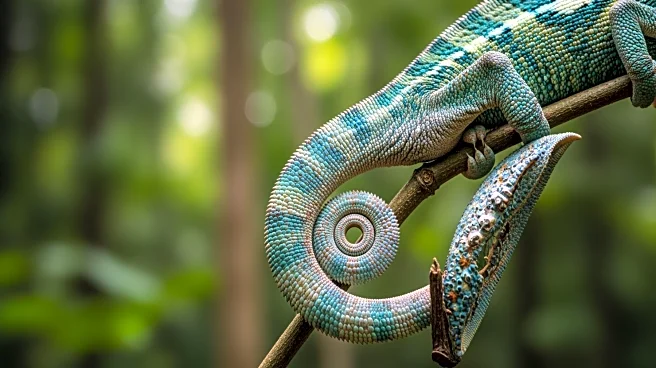
Researchers have identified a new species of chameleon in Madagascar, previously misclassified for nearly 150 years. The chameleon, now named Calumma pinocchio, was part of the Calumma gallus species complex,
known for its elongated nasal appendages. Genetic and anatomical studies revealed that this chameleon is distinct from what scientists initially thought. Additionally, another species, Calumma hofreiteri, was discovered, previously mistaken for Calumma nasutum. The study utilized museomics, a method to extract DNA from long-preserved specimens, to update the classification of these chameleons. This discovery brings the total number of chameleon species in Madagascar to 100, contributing to a global total of 236.
Why It's Important?
The discovery of new species in Madagascar highlights the island's rich biodiversity and the importance of accurate species classification. This research underscores the potential of museomics in identifying and classifying species, which can lead to better conservation strategies. Understanding the diversity and evolution of species like chameleons can provide insights into ecological dynamics and evolutionary processes. This knowledge is crucial for preserving biodiversity, especially in regions like Madagascar, which are hotspots for unique species. The findings also emphasize the need for continued exploration and study of historical specimens to uncover hidden biodiversity.
What's Next?
The identification of new species may prompt further research into the evolutionary history and ecological roles of chameleons in Madagascar. Conservationists might use this information to develop targeted strategies to protect these newly identified species and their habitats. Additionally, the success of museomics in this study could encourage its application in other regions and species complexes, potentially leading to more discoveries. Researchers may also investigate the evolutionary pressures that led to the distinct nasal appendages in these chameleons, providing deeper insights into their mating behaviors and ecological adaptations.