
What's Happening?
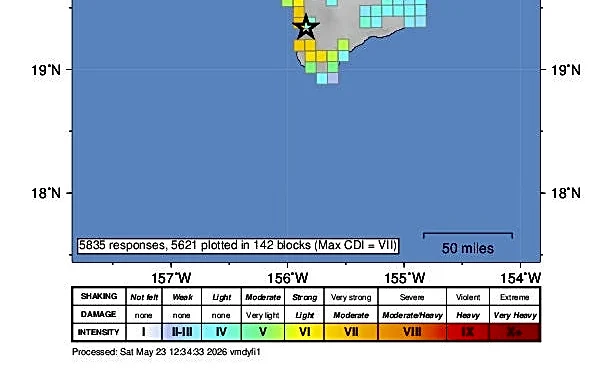
A magnitude 6.0 earthquake struck the western flank of Mauna Loa on Hawaii Island, according to the U.S. Geological Survey (USGS). The quake, initially recorded as a magnitude 5.9, was later upgraded to 6.0.
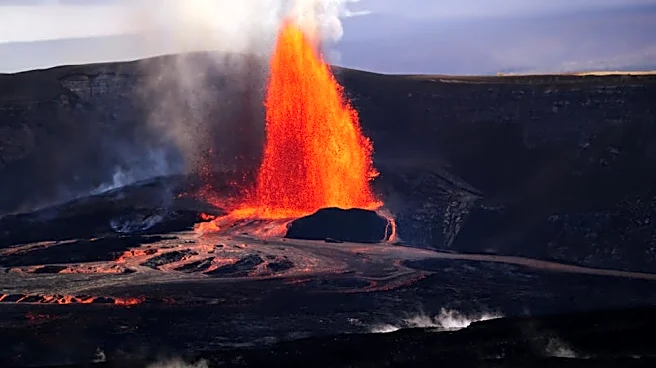
It occurred at a depth of 14 miles and was centered about 7 miles south of Honaunau-Napoopoo. The Hawaii Police Department reported road closures due to debris, and the Pacific Tsunami Warning Center confirmed that no tsunami was generated. The earthquake was felt across the state, including on Kauai, Oahu, and Maui. The USGS noted that the quake was caused by stress from the bending of the oceanic plate, unrelated to volcanic activity.
Why It's Important?
The earthquake's occurrence underscores the geological volatility of the Hawaiian Islands, which are subject to both seismic and volcanic activity. While no tsunami threat was reported, the quake's impact on infrastructure, such as road closures, highlights the potential for disruption. The event serves as a reminder of the importance of disaster preparedness and the need for robust infrastructure to withstand natural events. The economic implications could affect local businesses and tourism, especially if further seismic activity occurs.
What's Next?
Authorities will continue to monitor aftershocks, which are expected to occur but are unlikely to cause significant damage. The USGS encourages residents to report any damage to local civil defense agencies. Emergency services will remain vigilant, and residents are advised to stay informed through official channels. The situation will be closely watched for any changes in volcanic activity, particularly concerning Mauna Loa and Kilauea.