



What's Happening?
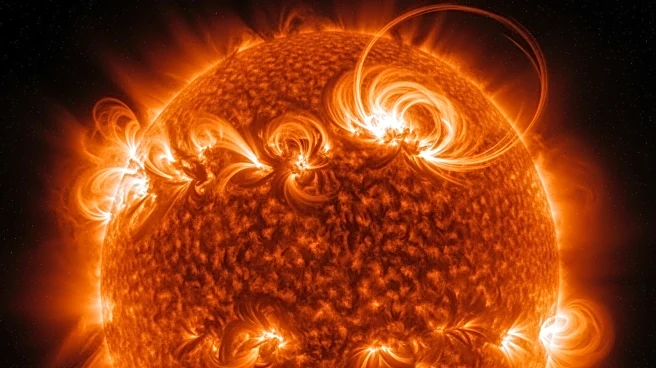
Recent observations have revealed unexpected solar activity as Solar Cycle 25 approaches its peak. Contrary to predictions of a weak cycle, the Sun has exhibited increased sunspot numbers and powerful solar flares. Notably, a polar vortex of solar plasma
was observed, a phenomenon not seen before. This heightened activity has implications for space weather, potentially affecting satellites, power grids, and causing auroras at lower latitudes. The unexpected intensity of Solar Cycle 25 suggests a shift in solar behavior, possibly linked to a longer, poorly understood solar cycle.
Why It's Important?
The increased solar activity poses significant risks to technological infrastructure on Earth. Geomagnetic storms, driven by solar flares and coronal mass ejections, can disrupt satellite operations, power grids, and GPS systems. The economic impact of such disruptions can be substantial, as seen in previous solar storms. Understanding and predicting solar activity is crucial for mitigating these risks and protecting critical infrastructure. The current cycle's unexpected strength highlights the need for improved space weather forecasting and preparedness.
What's Next?
Scientists are closely monitoring Solar Cycle 25 to better understand its progression and potential impacts. The unusual solar behavior may indicate a transition to a more active solar period, necessitating updates to existing models and forecasts. Continued observation and research are essential to anticipate future solar activity and its effects on Earth. Efforts to enhance space weather prediction capabilities and infrastructure resilience are likely to intensify as the cycle progresses.