





What's Happening?
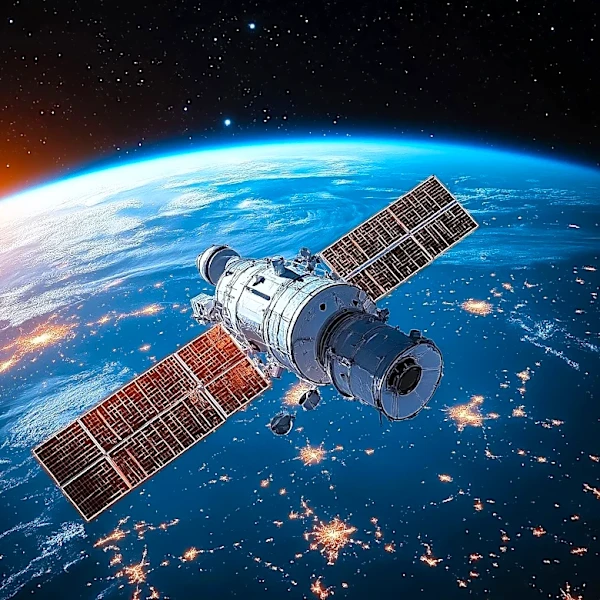
The European Space Agency’s ExoMars Trace Gas Orbiter has detected sharp, repeated pulses of hydrogen chloride (HCl) gas emanating from the northern flank of Alba Mons, a massive Martian volcano. This finding, reported in Science Advances, suggests the possibility
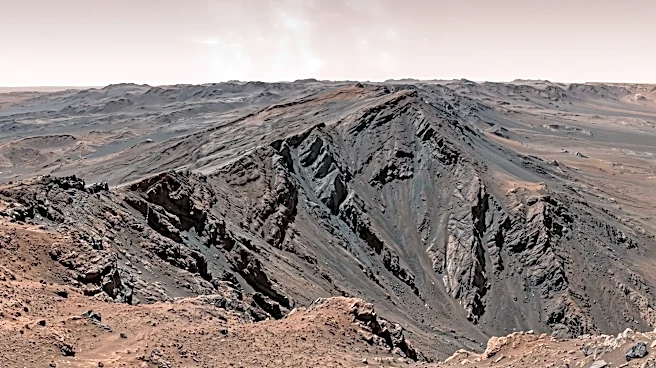
of molten rock beneath the surface of Mars, a planet generally considered geologically dead for billions of years. On Earth, volcanoes can emit HCl when rising magma decompresses. While most Martian HCl is linked to weather patterns, these specific pulses are unusual because they occur in the northern hemisphere, where a different seasonal cycle typically prevents such a phenomenon. The pulses consistently originate from Alba Mons, a volcano roughly the size of the contiguous United States, which exhibits youthful lava flows indicative of past geological activity. Researchers have also identified 330-foot-long fissures on the volcano's flank, which co-author Daniel Mège of the Polish Academy of Sciences suggests are associated with vertical magma sheets. The gas is only detected during Martian summers, as winter ice is believed to trap it.
Why It's Important?
This discovery is significant because it challenges the long-held belief that Mars is a geologically inactive planet. If confirmed to be magmatic in origin, these gas pulses would indicate that Mars retains enough internal heat to fuel ongoing volcanic activity, which has profound implications for understanding planetary evolution and the potential for past or present microbial life. The presence of subsurface magma could mean that Mars is not as 'dead' as previously thought, potentially offering insights into how smaller planets maintain internal heat. For the scientific community, particularly volcanologists and astrobiologists, this opens new avenues of research into Mars's geological processes and habitability. While no eruption is currently forecast, the possibility of active geological processes beneath the surface could reshape our understanding of the Red Planet's dynamic history and future.
What's Next?
Despite the intriguing evidence, researchers are not yet definitively concluding that ongoing volcanic activity is the source of the hydrogen chloride. Kevin Olsen, an atmospheric physicist at the University of Oxford and a co-author, states that 'the nature of the source is unknown,' and they cannot confirm the gas originates precisely from the observed fissures. Future research will focus on pinpointing the exact source of the HCl and determining if it is indeed linked to subsurface magma. Further seismic data, beyond what NASA’s InSight lander has provided (which did not record convincing magmatic signals from Alba Mons but did detect fluid movement in Elysium Planitia), would be crucial. Scientists like Tracy Gregg, a volcanologist at the University at Buffalo, suggest the fluid could be magma, water, or both, indicating the need for more detailed investigations to resolve this mystery.
Beyond the Headlines
The potential for ongoing geological activity on Mars, even if subtle, carries broader implications beyond just volcanology. It could influence theories about the planet's atmospheric evolution, as volcanic outgassing can significantly alter atmospheric composition over time. Furthermore, the presence of subsurface heat and potentially liquid water (if the fluid is indeed water or a mix) could create environments conducive to extremophile life, similar to those found around hydrothermal vents on Earth. This discovery reignites the debate about Mars's potential for habitability and could guide future missions to specific regions like Alba Mons to search for biosignatures. The ethical considerations of exploring potentially active geological sites and the long-term implications for human exploration of Mars would also come into play, as understanding the planet's internal dynamics is crucial for astronaut safety and resource utilization.