






What's Happening?
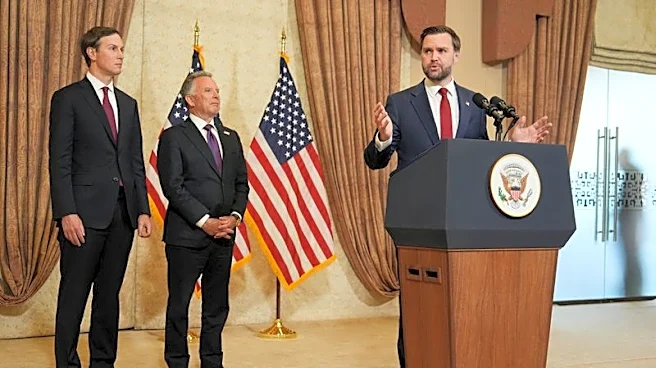
High-level negotiations between the United States and Iran in Islamabad have failed to produce a breakthrough, according to Iranian Foreign Minister Abbas Araqchi. The talks, which were the first of their kind in 47 years, aimed to end the ongoing conflict.
Araqchi stated that the parties were close to finalizing a memorandum of understanding, known as the 'Islamabad MoU,' but the discussions broke down due to 'maximalism' and shifting positions from the U.S. side. The failure of the talks raises questions about the fragile ceasefire currently in place.
Why It's Important?
The collapse of the talks has significant implications for international relations and regional stability. The failure to reach an agreement could lead to a resumption of hostilities, affecting global energy supplies and economic stability. The U.S. military's planned blockade of Iranian ports could further escalate tensions, impacting global oil markets and potentially leading to higher energy prices. The breakdown also highlights the challenges of diplomatic negotiations, where mutual trust and goodwill are essential for success.
What's Next?
Mediators from Pakistan, Egypt, and Turkey are continuing efforts to revive the talks and reach a deal before the ceasefire expires on April 21. The U.S. military is set to begin a blockade of Iranian ports, which could increase pressure on Iran to return to the negotiating table. However, the blockade also risks further escalating tensions and complicating diplomatic efforts. The international community will be closely watching the situation, as any escalation could have far-reaching consequences.