
What's Happening?
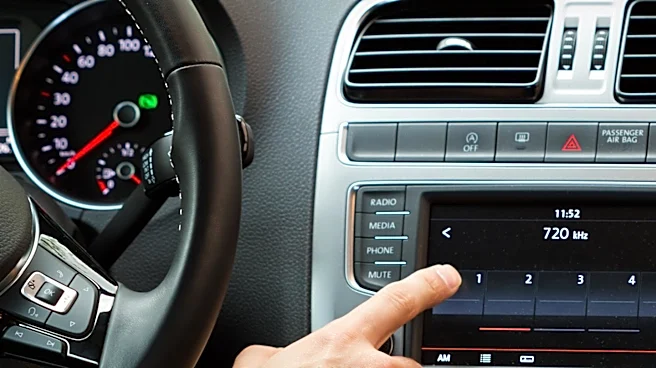
The U.S. House of Representatives is scheduled to vote on the AM Radio for Every Vehicle Act (H.R. 979) during the week of September 14. This bipartisan legislation, introduced by Reps. Gus Bilirakis (R-Fla.)
and Frank Pallone (D-N.J.) in the House, and Sens. Ted Cruz (R-Texas) and Ed Markey (D-Mass.) in the Senate (S. 315), aims to require the U.S. Department of Transportation to mandate AM broadcast radio as standard equipment in all new passenger vehicles sold in the United States. This would be at no additional cost to consumers. The push for this legislation began after several major automakers, particularly electric vehicle manufacturers, started removing AM radios from new car models, citing electromagnetic interference from EV drivetrains as a reason for disrupted audio quality. Broadcasting organizations nationwide are actively lobbying for the bill's passage.
Why It's Important?
The potential passage of the AM Radio for Every Vehicle Act carries significant implications for public safety, rural communities, and the broadcasting industry. Public safety officials, including former administrators of the Federal Emergency Management Agency (FEMA), emphasize that AM radio is a critical component of the Emergency Alert System (EAS). It provides vital public safety information during natural disasters or other emergencies when cellular networks and broadband internet may be unavailable. For rural, agricultural, and minority communities, AM signals offer broad geographical coverage, serving as a primary source of news and information where digital coverage can be unreliable. The legislation seeks to preserve this essential communication channel, ensuring that all Americans, regardless of location or access to other technologies, retain access to emergency broadcasts and local news.
What's Next?
The AM Radio for Every Vehicle Act is set for a critical floor vote in the U.S. House of Representatives during the week of September 14. The bill has substantial momentum, with over 310 House co-sponsors and more than 60 Senate co-sponsors, exceeding the threshold typically required for passage. If the House approves the measure, it will then advance to the Senate for a vote. Should it pass both chambers, the legislation will proceed to the President's desk for signature. Broadcasting organizations are making a final push to rally support among lawmakers and listeners ahead of the upcoming vote, highlighting the importance of AM radio as an indispensable lifeline and trusted source of information.
Beyond the Headlines
Beyond the immediate implications for vehicle features and emergency communications, this legislation touches upon broader themes of technological evolution versus established infrastructure, and the role of government in preserving access to traditional media. The debate highlights a tension between automotive manufacturers' drive for innovation and cost-efficiency, and the public's reliance on existing, proven systems for critical information dissemination. It also underscores the ongoing relevance of AM radio in an increasingly digital world, particularly for segments of the population or in scenarios where digital alternatives are not viable. The outcome could set a precedent for how future technological advancements in industries like automotive manufacturing are balanced against public service considerations and the preservation of legacy technologies deemed essential for national resilience.