






What's Happening?
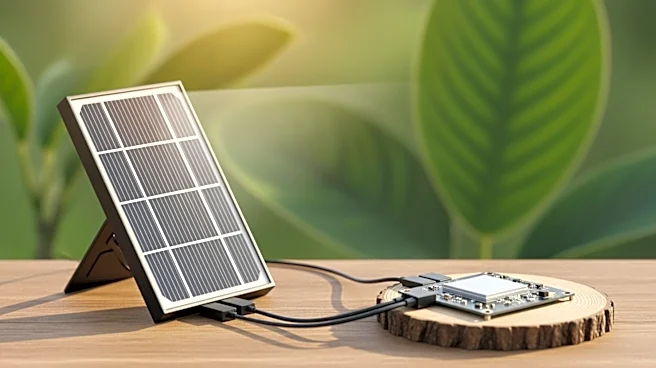
A solar-powered Raspberry Pi Zero W web server, utilizing Alpine Linux in 'diskless mode', is part of the 2026 Green Powered Challenge. The setup, designed by [Quackieduckie], aims to minimize power consumption by running essential services like lighttpd,
duckiebox, SSHD, and dchron, consuming only 27 MB of RAM. This configuration allows the server to operate efficiently without relying on SD card access, thus saving energy. The server can handle up to 50 simultaneous connections, maintaining a response time of 1.3 seconds, which is considered efficient for the hardware used. The project emphasizes sustainability and low power usage, featuring a 20W solar cell and battery setup to ensure continuous operation.
Why It's Important?
This project highlights the potential for sustainable technology solutions in reducing energy consumption and environmental impact. By using solar power and efficient software configurations, it demonstrates how small-scale servers can operate effectively with minimal resources. This approach could influence future designs in tech industries, encouraging the adoption of eco-friendly practices. It also showcases the versatility of Raspberry Pi and Alpine Linux in creating low-cost, energy-efficient systems, which could benefit educational and remote applications where power resources are limited.
What's Next?
The Green Powered Challenge continues until April 24th, encouraging more innovative solutions in sustainable technology. Projects like this may inspire further developments in solar-powered computing, potentially leading to broader adoption in various sectors. As awareness grows, companies and individuals might explore similar setups to reduce their carbon footprint and operational costs.