


What's Happening?
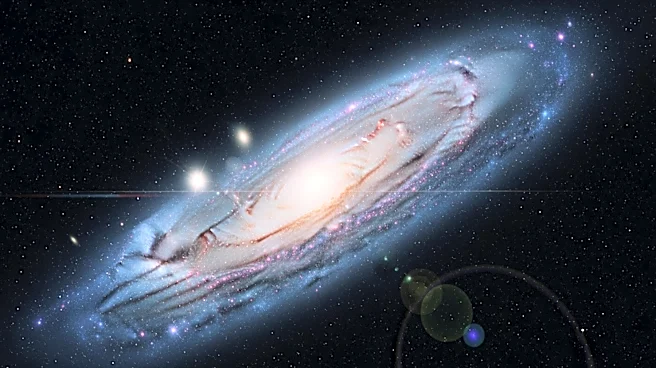
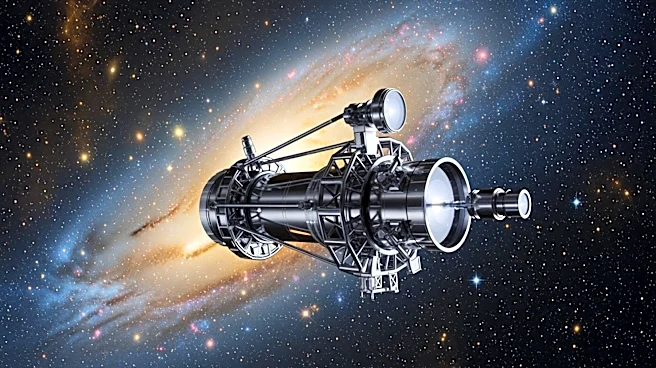
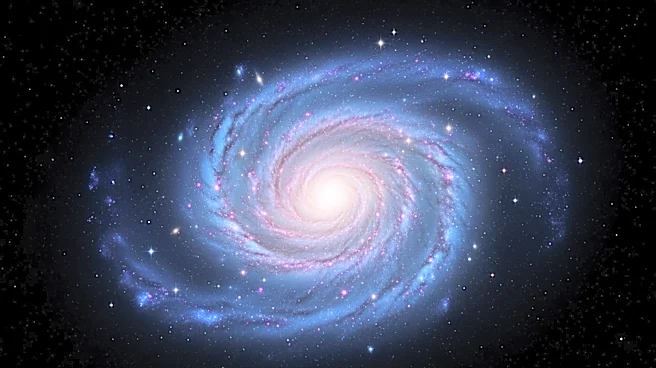
Astronomers have utilized the James Webb Space Telescope (JWST) alongside the Hubble Space Telescope to capture new images of nearly 9,000 young star clusters across four nearby galaxies. These observations have provided fresh insights into the birthplaces
of star clusters and their role in galaxy evolution. The study, led by Alex Pedrini from Stockholm University, reveals how massive star clusters break free from their natal gas clouds faster than previously thought, significantly altering their surroundings. This process, known as stellar feedback, involves the release of intense ultraviolet radiation and stellar winds that heat and disperse nearby gas, regulating future star formation. The findings, published in Nature Astronomy, also suggest that young planetary systems within these clusters may be exposed to harsh radiation earlier than expected, potentially affecting planet formation.
Why It's Important?
The research offers critical insights into the processes that govern galaxy evolution and star formation. By understanding how star clusters influence their environments, scientists can better predict the formation and development of galaxies. The study also highlights the JWST's capabilities in uncovering hidden galactic structures, enhancing our understanding of the universe. The implications for planet formation are significant, as the exposure to ultraviolet radiation could limit the growth of planets, affecting the potential for life-supporting conditions. This research bridges the gap between star formation simulations and observational data, providing new constraints on how star clusters emerge and evolve.
What's Next?
Future research will likely focus on further exploring the relationship between star clusters and their environments, using the JWST's advanced capabilities. Scientists may conduct more detailed studies on the impact of stellar feedback on galaxy evolution and planet formation. The findings could lead to refined models of star and planet formation, influencing our understanding of the universe's structure and the potential for life beyond Earth. Continued collaboration between researchers simulating star formation and those working with observational data will be crucial in advancing this field.