
What's Happening?
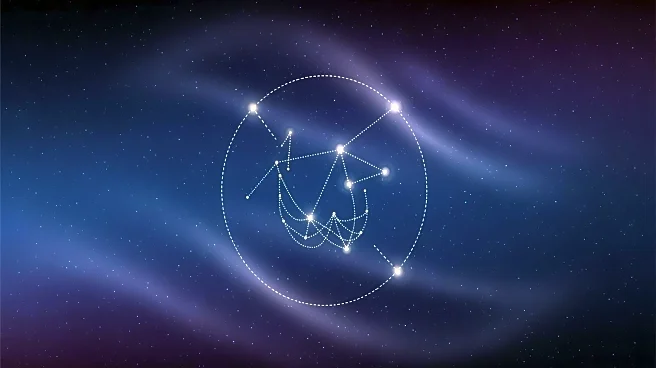
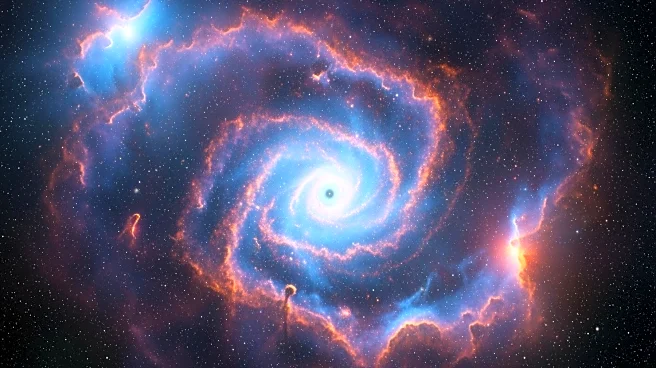
The James Webb Space Telescope (JWST) has provided a new, detailed image of the Helix Nebula, also known as the Eye of God, located approximately 650 light-years away in the constellation Aquarius. This
nebula is a planetary nebula formed from the outer layers of a dying star, which has collapsed into a white dwarf. The JWST's Near-Infrared Camera (NIRCam) captured the intricate structure of the nebula, highlighting the interaction between the hot gas emitted by the white dwarf and the cooler, previously shed gas and dust. This image offers a glimpse into the future of our own solar system, as the sun is expected to undergo a similar transformation in about 5 billion years.
Why It's Important?
The new image of the Helix Nebula provides astronomers with a clearer understanding of the processes involved in the death of stars similar to our sun. By studying the interactions between the hot and cold gases in the nebula, scientists can gain insights into the formation of complex molecules that could eventually lead to the creation of new planets and potentially life. This observation underscores the JWST's capability to reveal hidden structures in the universe, enhancing our understanding of stellar evolution and the lifecycle of stars.
What's Next?
Future observations with the JWST and other telescopes will continue to explore the Helix Nebula and similar structures, aiming to uncover more about the formation of planetary nebulas and the role of white dwarfs in the cosmic lifecycle. These studies could provide further insights into the conditions necessary for planet formation and the potential for life elsewhere in the universe.