
What's Happening?
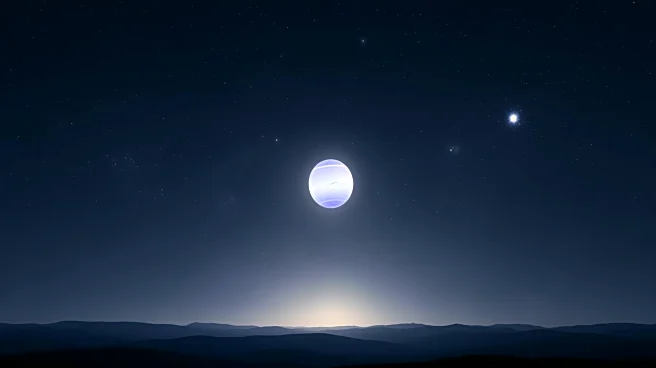
Neptune is currently visible in the night sky as a telescopic 'star' of magnitude 7.8, located 4° above Saturn. Observers will need a detailed finder chart to locate Neptune due to its dimness and small
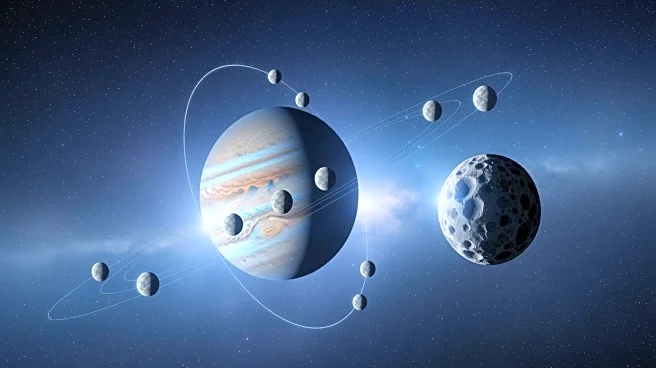
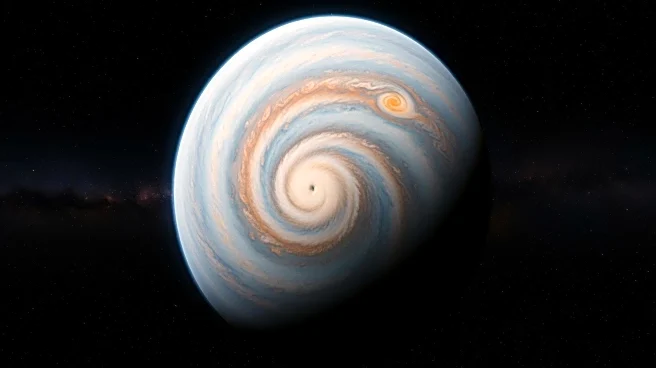
size, appearing as a speck just 2.3 arcseconds wide. The planet's visibility is part of a broader celestial event lineup for early January, which includes the full moon, the Quadrantid meteor shower, and Jupiter's opposition. The full moon, occurring on January 2nd, will affect the visibility of the Quadrantid meteor shower due to its brightness. Jupiter, meanwhile, is nearing opposition, making it a prominent feature in the night sky alongside its moons and the Great Red Spot.
Why It's Important?
The visibility of Neptune and other celestial events in January provides an opportunity for both amateur and professional astronomers to observe and study these phenomena. Neptune's position relative to Saturn offers a chance to explore the outer planets of the solar system, enhancing our understanding of their characteristics and movements. The alignment of Jupiter and its opposition is particularly significant, as it allows for detailed observation of the planet's features, including its moons and atmospheric conditions. These events contribute to ongoing astronomical research and public interest in space exploration, fostering a deeper appreciation for the complexities of the solar system.