
What's Happening?
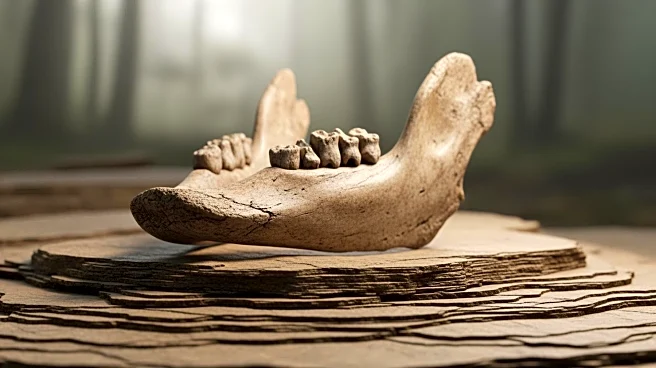
A Denisovan jawbone was discovered at the bottom of the Taiwan Strait, providing new insights into the geographical range of this ancient human species. The fossil, found at depths of 60 to 120 meters,
suggests that Denisovans, previously thought to inhabit only colder, mountainous regions, also lived in warmer climates of Asia. This discovery challenges the existing narrative that Denisovans were confined to areas like Siberia's Denisova Cave and the Tibetan Plateau. The identification of the jawbone as Denisovan was confirmed through paleoproteomics, a method that analyzes proteins in ancient bones and teeth. Researchers extracted over 4,000 amino acid residues from the fossil's tooth enamel, identifying two as Denisovan-specific, which also indicated the individual was male.
Why It's Important?
This discovery significantly broadens the understanding of Denisovan adaptability and their potential interactions with other human species. The ability of Denisovans to thrive in diverse environments suggests they were a highly flexible species, capable of surviving in both cold and warm climates. This adaptability could have implications for understanding human evolution and migration patterns. The use of paleoproteomics in this study also highlights the potential for new technologies to uncover details about ancient species that traditional DNA analysis cannot, due to the age and condition of the fossils.
What's Next?
Further research is needed to determine the full extent of Denisovan habitats and their interactions with other human species. The combination of paleoproteomics and genetic analysis could help pinpoint when and where Denisovans roamed, potentially leading to more discoveries about their lifestyle and eventual disappearance. This could also provide insights into the evolutionary history of modern humans and their genetic links to Denisovans.