



What's Happening?
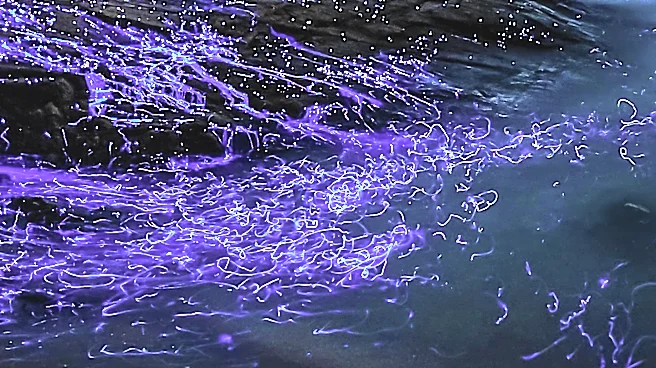
Marin County firefighters have recovered the bodies of two canoers who went missing during a bioluminescent tour on Tomales Bay. The men launched before midnight on Saturday and were reported missing when they did not return. Their bodies were recovered on Sunday
morning, and officials confirmed both men were wearing life jackets. On Monday, the Marin County Sheriff's Office identified one of the deceased as 36-year-old San Francisco resident Casey Flynn Melia. The identity of the second man has not yet been released. First responders located the other man unresponsive in the water and transported him to Bodega Bay in Sonoma County, where he was pronounced dead. Melia was later found unresponsive near Hog Island and taken to Sacramento Landing, where he was also declared deceased. A joint investigation into the incident is currently underway, involving the Marin County Sheriff's Office, the U.S. Coast Guard, and the National Parks Service.
Why It's Important?
This tragic incident underscores the inherent dangers associated with recreational activities in certain waterways, even when safety precautions like wearing life jackets are observed. Battalion Chief Bret McTigue of the Marin County Fire Department highlighted that the area of Tomales Bay, particularly its mouth, is considered one of California's most perilous coastlines. This event serves as a critical reminder for individuals engaging in water sports to thoroughly research and understand the specific risks of their chosen location. It also emphasizes the importance of preparedness and caution, even for seemingly routine tours. The ongoing joint investigation by multiple agencies suggests a comprehensive effort to understand the circumstances leading to the deaths, which could inform future safety guidelines or public awareness campaigns for water recreation in the region. The loss of life impacts the local community and highlights the need for continuous vigilance regarding water safety.
What's Next?
A joint investigation involving the Marin County Sheriff's Office, the U.S. Coast Guard, and the National Parks Service is ongoing to determine the exact cause and circumstances of the deaths. This investigation will likely involve examining weather conditions, equipment, and any other contributing factors. Officials are urging boaters to carry a marine radio and wear a life jacket, reinforcing existing safety recommendations. The identification of the second canoer is pending. The findings from the investigation could lead to updated safety advisories or regulations for tours and recreational activities in Tomales Bay, particularly concerning nighttime excursions. Public awareness campaigns about the dangers of the waterway, as highlighted by Battalion Chief Bret McTigue, may also be intensified to prevent similar future tragedies.
Beyond the Headlines
The incident in Tomales Bay brings to light the broader challenges of balancing recreational tourism with environmental safety, especially in ecologically sensitive and potentially hazardous natural areas. Bioluminescent tours, while offering unique experiences, often occur in low-light conditions, which inherently increase risks. This event could prompt a re-evaluation of safety protocols for commercial and private tours operating in such environments, potentially leading to stricter guidelines regarding weather conditions, group sizes, and mandatory safety equipment beyond life jackets. It also raises questions about the level of preparedness and local knowledge required for guides and participants in these specialized tours. The tragedy serves as a stark reminder of nature's unpredictable power and the critical need for respect and thorough preparation when engaging with it, even in seemingly serene settings.