






What's Happening?
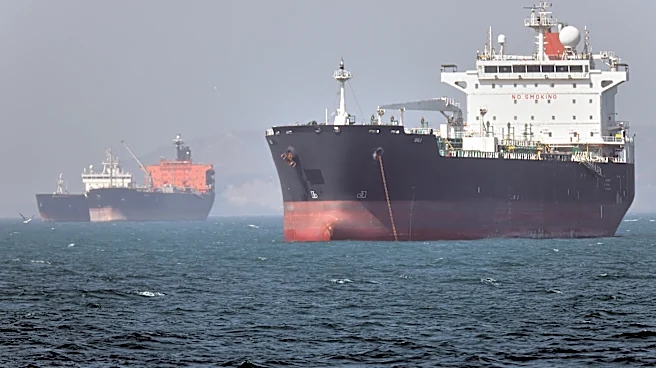
The CEO of Saudi Aramco, Amin Nasser, has issued a warning regarding the prolonged recovery of the global oil market due to disruptions in the Strait of Hormuz caused by the ongoing conflict involving Iran. During an earnings call, Nasser highlighted
that the global energy market has lost approximately 1 billion barrels of oil supply since the crisis began. Efforts to reroute shipments and utilize strategic petroleum reserves have provided some relief, but the market remains strained. The closure of the Strait of Hormuz, a critical passage for about 20% of the world's oil supply, has led to a significant reduction in oil output. Saudi Aramco has increased the use of its East-West pipeline, which bypasses the Strait, to mitigate the impact. However, Nasser emphasized that the market may not normalize until 2027 if the disruptions persist.
Why It's Important?
The disruption in the Strait of Hormuz has significant implications for the global energy market, particularly affecting oil supply and prices. The loss of 1 billion barrels of oil supply has created a substantial energy shock, impacting economies worldwide. The situation underscores the critical role of oil and gas in energy security and the global economy. The prolonged recovery period could lead to sustained high energy prices, affecting consumers and industries reliant on oil. Additionally, the crisis highlights the vulnerability of global supply chains to geopolitical tensions, prompting countries to reconsider their energy strategies and dependencies.
What's Next?
If the disruptions in the Strait of Hormuz continue, the global oil market may face prolonged instability, with potential impacts on economic growth and energy security. Saudi Aramco is exploring ways to expand its export capacity at the Yanbu terminal to alleviate some of the supply constraints. Meanwhile, countries may increase their strategic petroleum reserves and seek alternative energy sources to reduce reliance on Middle Eastern oil. The situation may also prompt international diplomatic efforts to resolve the conflict and ensure the security of vital shipping routes.