



What's Happening?
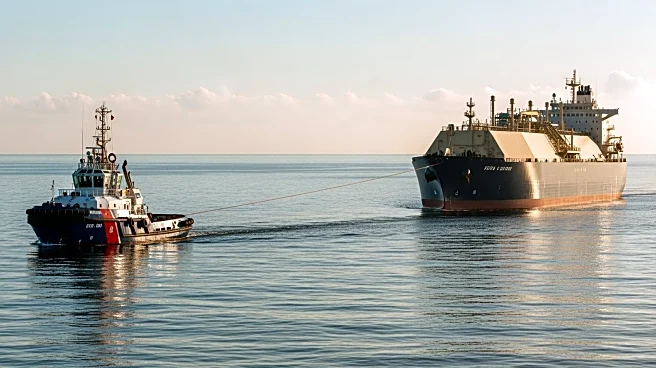
The Libyan coast guard has initiated the towing of a damaged Russian liquefied natural gas (LNG) tanker, the Arctic Metagaz, which had been drifting unmanned in the Mediterranean Sea. The tanker, carrying LNG from Murmansk, Russia, was reportedly hit
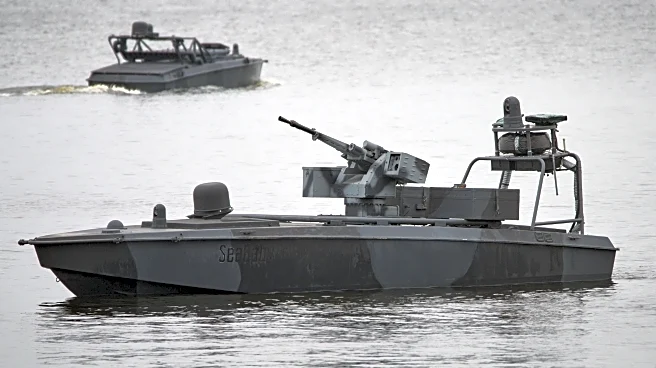
by Ukrainian naval drones, according to Russia's Transport Ministry. The vessel posed a significant environmental threat, prompting warnings from several Mediterranean countries, including Italy, France, and Spain, who alerted the European Commission about the potential for a major ecological disaster. The Tripoli-based Government of National Unity (GNU) has tasked Libya's National Oil Corporation with unloading the tanker's cargo and is coordinating with Russian and Maltese authorities to ensure maritime safety. The final destination of the tanker remains undisclosed.
Why It's Important?
The incident underscores the geopolitical tensions in the region, particularly involving Russia and Ukraine, and highlights the environmental risks associated with maritime transport of hazardous materials. The drifting tanker posed a threat not only to Libya but also to the broader Mediterranean ecosystem, which could have faced severe ecological damage. The coordinated international response reflects the urgency and importance of addressing such maritime threats promptly. This situation also emphasizes the need for robust maritime safety protocols and international cooperation to prevent similar incidents in the future.
What's Next?
The immediate focus will be on safely unloading the LNG cargo and determining the tanker's final destination. The incident may prompt further diplomatic discussions between the involved countries, particularly concerning maritime security and environmental protection. Additionally, there may be increased scrutiny on the use of drones in maritime conflicts and their potential impact on civilian and environmental safety. The European Union and other international bodies might consider revising regulations to enhance maritime safety and prevent future ecological threats.