






What's Happening?
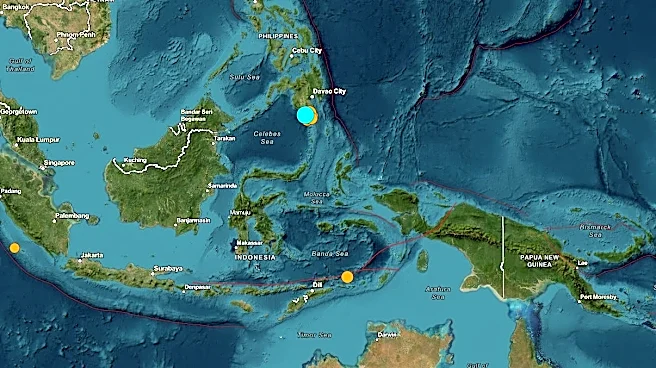
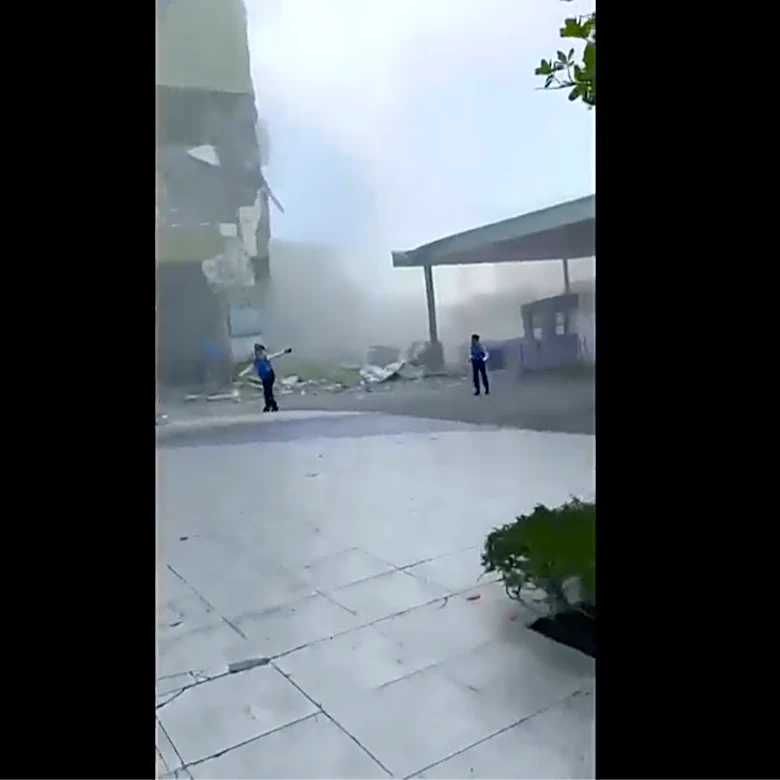
A powerful 7.8 magnitude earthquake struck the southern Philippines early Monday, with the epicenter located 13 kilometers southwest of General Santos city on Mindanao island. The earthquake, which occurred at a depth of 10 kilometers, prompted the Philippine Institute
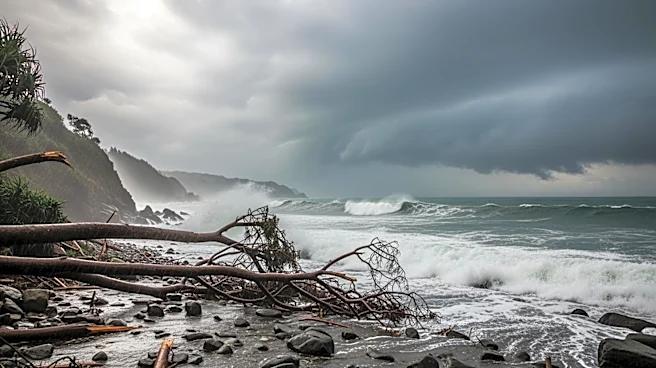
of Volcanology and Seismology to issue a tsunami warning, advising residents in coastal areas to evacuate to higher ground. The Pacific Tsunami Warning Center indicated that tsunami waves up to 3 meters could impact some Philippine coasts, with smaller waves possible in Indonesia, Malaysia, and other parts of the western Pacific. Power outages were reported, and aftershocks as strong as 6.1 magnitude followed the initial quake.
Why It's Important?
The earthquake highlights the vulnerability of the Philippines, a nation frequently affected by seismic activity due to its location on the Pacific 'Ring of Fire.' The potential for a tsunami poses significant risks to coastal communities, necessitating swift evacuation and emergency response efforts. The event underscores the importance of disaster preparedness and the need for robust infrastructure to withstand natural calamities. The economic impact could be substantial, affecting local industries, particularly fishing and tourism, which are vital to the region's economy.
What's Next?
Authorities will continue to monitor the situation closely, with emergency services on high alert to assist affected communities. The response will likely involve coordination between local and international agencies to provide aid and support. The focus will be on ensuring the safety of residents, assessing damage, and restoring essential services. Long-term, there may be discussions on improving infrastructure resilience and enhancing early warning systems to better prepare for future seismic events.