



What's Happening?
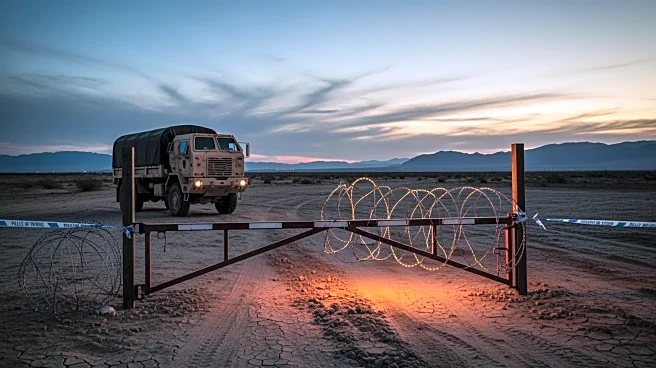
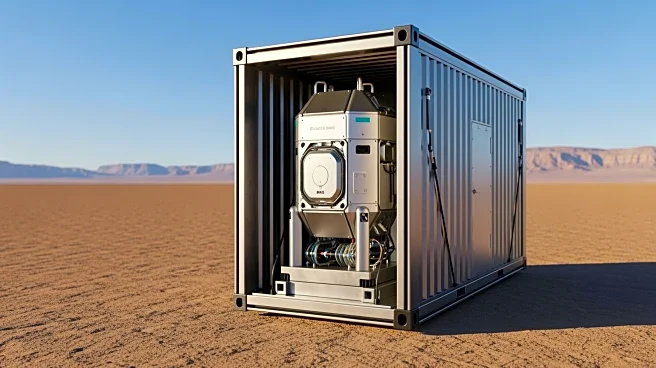
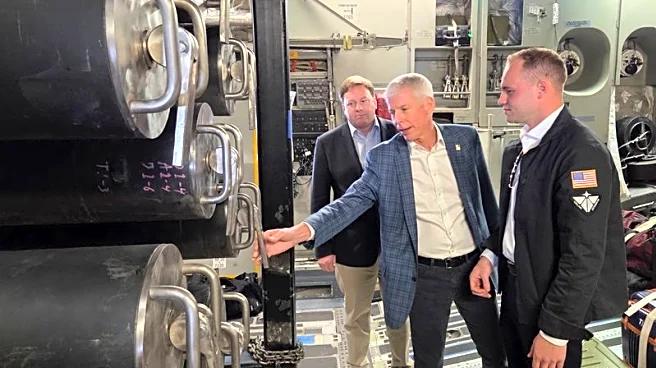
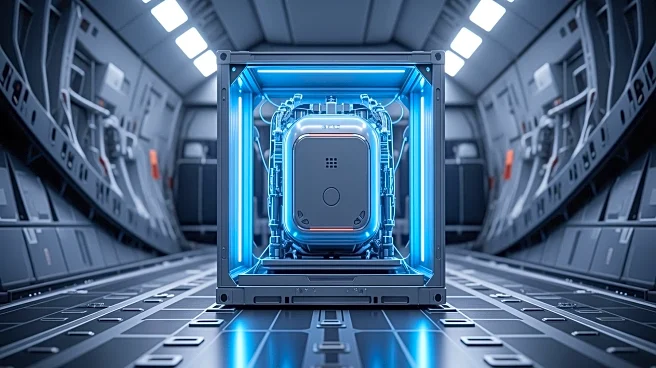
In a significant development, the U.S. Air Force has transported a micro nuclear reactor, the Ward250, from March Air Reserve Base in California to Hill Air Force Base in Utah using C-17 cargo jets. This operation, known as Operation Windlord, is part
of the U.S. Department of Energy's Nuclear Reactor Pilot Program, initiated under President Trump's Executive Order 14301. The reactor will undergo testing at the Utah San Rafael Energy Lab (USREL) in Orangeville, Utah. This marks the first time a nuclear reactor has been airlifted by a C-17, highlighting the U.S. military's interest in integrating micro nuclear reactors into power grids for critical installations.
Why It's Important?
The airlift of the Ward250 reactor underscores the U.S. government's strategic focus on nuclear energy as a key component of national security and energy independence. As renewable energy sources struggle to meet baseload demands, nuclear power offers a reliable and cost-effective solution to power America's technological and industrial sectors. The successful deployment and testing of micro nuclear reactors could enhance energy resilience for military bases, especially those in remote locations. This initiative aligns with broader efforts to modernize the U.S. energy landscape and reduce reliance on traditional power grids, which are increasingly vulnerable to disruptions.
What's Next?
Following the successful delivery of the Ward250 reactor, the focus will shift to its testing and evaluation at USREL. The outcomes of these tests could pave the way for broader adoption of micro nuclear reactors across military and commercial sectors. The Department of Energy's pilot program aims to advance nuclear technologies with potential applications in both defense and civilian energy markets. As the U.S. seeks to bolster its energy infrastructure, the integration of micro reactors could play a crucial role in meeting the growing electricity demands driven by advancements in artificial intelligence and other energy-intensive industries.
Beyond the Headlines
The deployment of micro nuclear reactors represents a potential shift in the U.S. energy strategy, emphasizing the need for a diversified energy portfolio that includes advanced nuclear technologies. This approach not only addresses current energy challenges but also positions the U.S. as a leader in nuclear innovation. The use of TRISO fuel and helium cooling in the Ward250 reactor offers enhanced safety and performance compared to traditional nuclear technologies. As the U.S. navigates the complexities of energy security and climate policy, the successful implementation of micro reactors could serve as a model for other nations seeking to balance energy needs with environmental considerations.