








What's Happening?
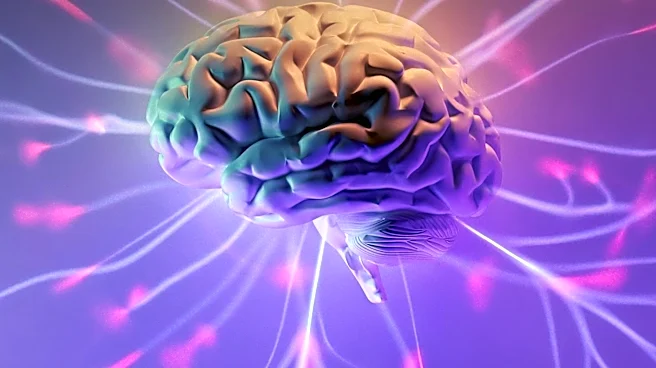
A new study from Virginia Tech's Fralin Biomedical Research Institute is challenging long-held assumptions about the relationship between two types of brain cells in the cerebellum, which is crucial for coordinating movement. The research, led by Meike
van der Heijden, found that the activity of Purkinje cells does not reliably predict the activity of deep cerebellar nuclei cells, despite their direct anatomical connection. This discovery suggests that previous studies on movement disorders such as dystonia, ataxia, and tremor may have relied on misleading signals. The study highlights the need for a better understanding of these neuron types to optimize treatments for these conditions.
Why It's Important?
The findings have significant implications for both research and treatment of cerebellar movement disorders. By revealing that Purkinje cell activity is not a reliable indicator of deep nuclei cell activity, the study suggests that researchers may need to reconsider their approach to studying these disorders. This could lead to more accurate diagnoses and more effective treatments. The research also underscores the importance of directly studying deep nuclei cells, which are more challenging to access but crucial for understanding cerebellar function in disease states. This shift in focus could ultimately improve outcomes for patients with movement disorders.
What's Next?
The study calls for a reevaluation of current research methodologies and treatment strategies that focus on Purkinje cells. Researchers are encouraged to conduct further experiments to test their hypotheses about cerebellar activity in disease states. This could involve developing new techniques to study deep nuclei cells more effectively. Additionally, the findings may prompt a broader discussion within the scientific community about the assumptions underlying neurological research and the need for more comprehensive approaches to studying complex brain functions.