
What's Happening?
Kansas State University horticulture expert Matt McKernan has provided essential guidance for gardeners on how to winterize roses and strawberries. With unseasonably warm November temperatures in Kansas,
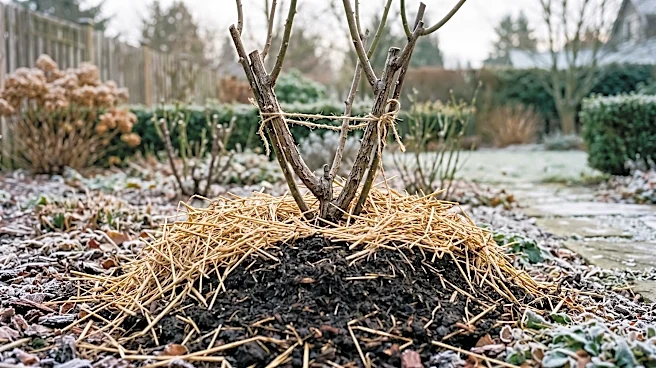
McKernan emphasizes the importance of preparing these plants for the impending colder days. For roses, he advises winterizing after several hard frosts but before the ground freezes to prevent mold growth and damage to the graft union. Gardeners should clean debris around roses, mound 8-10 inches of soil or compost around each plant, and use new soil to avoid root exposure. Once the ground is frozen, a four-inch layer of mulch (straw, leaves, or wood chips) should be added over the mound and covered with soil to hold it in place. This method protects plants from cold and prevents premature budding during warm spells. Rose canes should be pruned to 36 inches, with weak ones removed, and remaining canes tied loosely to prevent wind damage. For strawberries, McKernan stresses the necessity of mulch to protect against winter damage, including sudden temperature drops that can kill fruit buds and injure roots. He recommends a three-inch layer of straw mulch after several frosts but before a heavy freeze, typically between Thanksgiving and Christmas in Kansas. Exposing strawberry plants to cold temperatures before mulching is crucial for hardening them off. If temperatures are forecasted to drop below 20°F, mulch should be applied, then uncovered for a few weeks after the cold snap to allow continued hardening.
Why It's Important?
This guidance from Kansas State University is crucial for U.S. gardeners, particularly those in regions experiencing fluctuating winter temperatures, as it directly impacts the success and longevity of their rose and strawberry plants. Improper winterization can lead to significant plant loss, resulting in wasted effort, time, and financial investment for home gardeners. The advice on timing—winterizing after hard frosts but before deep freezes—is critical for plant health, preventing issues like mold or damage to sensitive plant structures. For instance, the recommendation to use new soil for mounding roses helps protect roots, which is vital for the plant's survival and subsequent spring growth. Similarly, the specific instructions for strawberry plants, including the timing of mulch application and the importance of hardening off, are essential for protecting fruit buds and preventing root damage from freeze-thaw cycles. This information helps gardeners avoid common pitfalls that can lead to crop failure or weakened plants, ensuring a healthier garden and potentially better yields in the following growing season. The proactive measures outlined by McKernan contribute to sustainable gardening practices and help preserve the aesthetic and productive value of these popular garden staples across U.S. households.
What's Next?
Gardeners in Kansas and similar climate zones are advised to monitor local weather forecasts closely to determine the optimal timing for winterizing their roses and strawberries, following McKernan's recommendations. As the ground thaws in the spring, the mulch and soil from the base of the rose plants should be removed to restore normal soil levels. For strawberry plants, the mulch will remain in place until spring when new growth begins. K-State's Department of Horticulture and Natural Resources will continue to provide weekly Horticulture Newsletters, offering ongoing tips for maintaining home landscapes and gardens. Gardeners can subscribe to this newsletter, submit questions via email, or contact their local K-State Extension office for further assistance. This ongoing support ensures that gardeners have access to up-to-date, localized advice to manage their plants effectively through seasonal changes.
Beyond the Headlines
The detailed winterization advice for roses and strawberries highlights a broader trend in U.S. horticulture: the increasing need for adaptive gardening practices due to unpredictable weather patterns, potentially linked to climate change. The mention of "unseasonably warm November temperatures" underscores the challenges gardeners face in timing traditional seasonal tasks. This situation necessitates a more informed and flexible approach to plant care, moving beyond rigid calendars to responsive strategies based on real-time environmental conditions. The emphasis on preventing mold, protecting graft unions, and hardening off plants reflects a deeper understanding of plant physiology and disease prevention, crucial for maintaining plant health in variable climates. Furthermore, the role of university extension services, like Kansas State University's, becomes even more critical in disseminating scientific, localized, and practical information to the public, empowering home gardeners to adapt and succeed in a changing environment. This proactive educational outreach fosters resilience in local food systems and promotes sustainable practices at the household level.