







What's Happening?
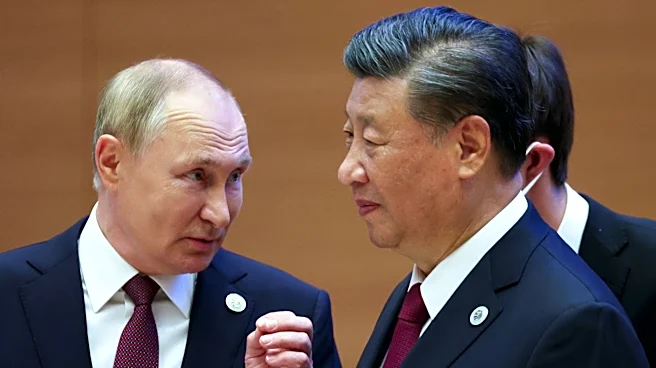
The U.S. is closely monitoring the strengthening alliance between China and Russia, as both nations increasingly challenge U.S. global influence and promote a 'multipolar world.' This partnership has deepened, particularly since Western sanctions were
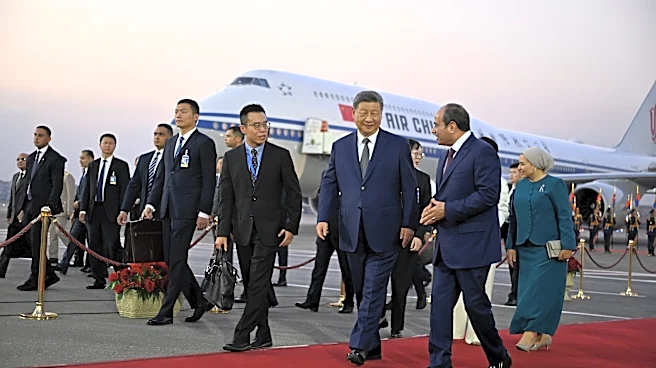
imposed on Russia over the conflict in Ukraine, leading to a more sanctions-resistant financial and economic relationship between Beijing and Moscow. Concurrently, African countries are increasingly adopting a 'multi-alignment' strategy, pursuing relationships with multiple global powers—including the U.S., China, and Russia—rather than exclusively aligning with one. This approach allows African nations to balance economic, military, and diplomatic interests, as exemplified by Egypt, which maintains ties with Washington while deepening relations with Beijing and Moscow. This shift provides African governments with more opportunities to negotiate investments, trade deals, and security cooperation on their own terms.
Why It's Important?
This trend is significant for the U.S. as it indicates a decline in its singular global dominance and the emergence of a more complex international order. The strengthening China-Russia alliance directly challenges U.S. foreign policy objectives and its traditional alliance systems, potentially eroding trust in U.S. partnerships and weakening its influence. For African nations, the multi-alignment strategy offers increased leverage and autonomy, allowing them to secure better terms in international engagements and diversify their partnerships. This competition among global powers for influence in Africa transforms the continent into a crucial arena for economic, military, and diplomatic maneuvering. The U.S. stands to lose if it fails to adapt its engagement strategies to this new multipolar reality, potentially ceding economic and strategic advantages to rivals like China and Russia.
What's Next?
In response to the strengthening China-Russia alliance and Africa's multi-alignment, the U.S. is likely to re-evaluate and adjust its foreign policy and engagement strategies in Africa. This could involve increasing diplomatic efforts, offering more competitive economic incentives, and strengthening security partnerships to counter the growing influence of China and Russia. African nations will likely continue to leverage this competition to their advantage, seeking to maximize benefits from various global partners. The U.S. may also focus on reinforcing its existing alliances and partnerships to present a united front against what it perceives as an emerging authoritarian alignment. The ongoing competition for resources, markets, and strategic positioning in Africa will intensify, leading to a more dynamic and complex geopolitical landscape on the continent.
Beyond the Headlines
The shift towards multi-alignment in Africa, driven by the competition between global powers, has profound implications for international relations and the future of global governance. It challenges the traditional post-Cold War unipolar order and signals a move towards a more distributed power structure. This trend could empower developing nations to assert greater sovereignty and pursue independent foreign policies, free from the pressures of exclusive alliances. Ethically, it raises questions about the responsibilities of global powers in their engagement with African nations, particularly regarding sustainable development, human rights, and avoiding the exploitation of resources. Culturally, it could foster a more diverse set of international norms and values, as different global powers bring their own perspectives and models of development to the continent, potentially leading to a richer, albeit more complex, global dialogue.